
Oct 26, 2026
Content
A heated tower fan puts a heating element inside the slim, oscillating body of a tower fan, so the same appliance cools you in summer and warms you in winter. Most full-size models run at 1500 watts, which is the practical upper limit for a standard residential outlet, and they produce roughly 5118 BTU per hour of heat - enough for a well-insulated room of about 150 to 200 square feet. Here is the short answer to whether a heated tower fan is worth it: yes, if you live in a small or medium room and want one appliance instead of two; no, if you need to heat a large open-plan space.
This guide explains how a heated tower fan works, compares it with buying a separate fan and heater, breaks down the specifications that actually matter, shows how to size it for your room, and covers safety, running costs, maintenance, and the most common questions buyers ask.
A heated tower fan combines three sub-systems in one vertical cabinet: a motor-driven impeller, an electric heating element, and a control board. The impeller pulls air in through the rear or side intake grille and pushes it out through the front louvres. In fan-only mode, you get ordinary tower fan airflow. In heat mode, the air passes over the heating element first, so what comes out of the front grille is warm air.
The vast majority of current heated tower fans use PTC (positive temperature coefficient) ceramic elements. A PTC element has a useful physical property: as it gets hotter, its electrical resistance rises, which automatically limits the current. That self-regulating behavior means the element reaches a stable temperature and does not keep getting hotter. Coil and quartz elements in older models had to rely on separate thermal fuses; PTC builds the limit into the material itself.
A 1500 W PTC element produces about 5118 BTU per hour, which is double the output of a 700 W carbon-tube heater and roughly 50 percent more than a 1000 W model. In practice, a 1500 W tower can raise a 120 sq ft bedroom from 16 C to 21 C in about 15 to 20 minutes, depending on outdoor temperature and insulation. Wattage is the single most honest number to compare: it determines how fast and how powerfully the unit heats.
When the heater is off, the unit works like any oscillating tower fan. Most models sweep 60 to 90 degrees and offer between 4 and 12 speed levels. Because a tower fan uses an impeller rather than exposed blades, it is noticeably quieter than a pedestal fan at the same airflow level, and it is safer around small children and pets. For warm-season use, check the fan speed count and the airflow rating in CFM to make sure it can move enough air for your room.
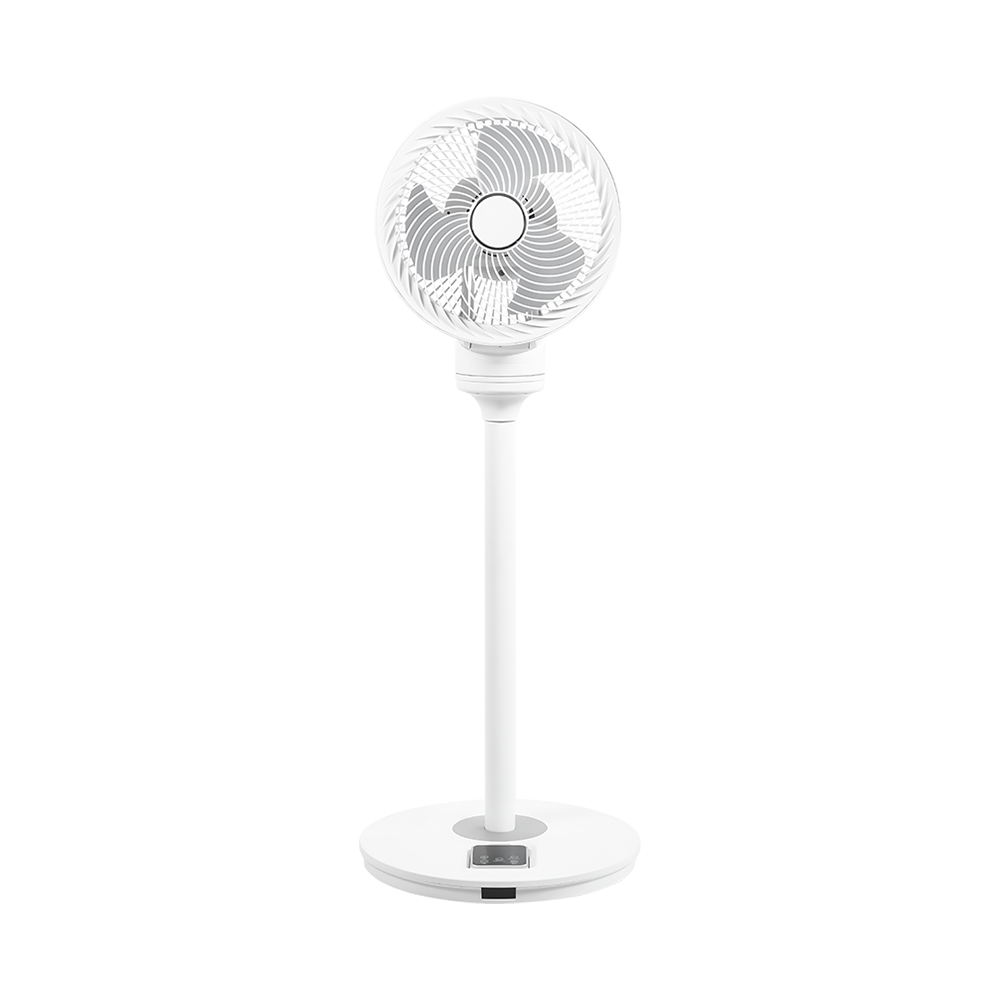
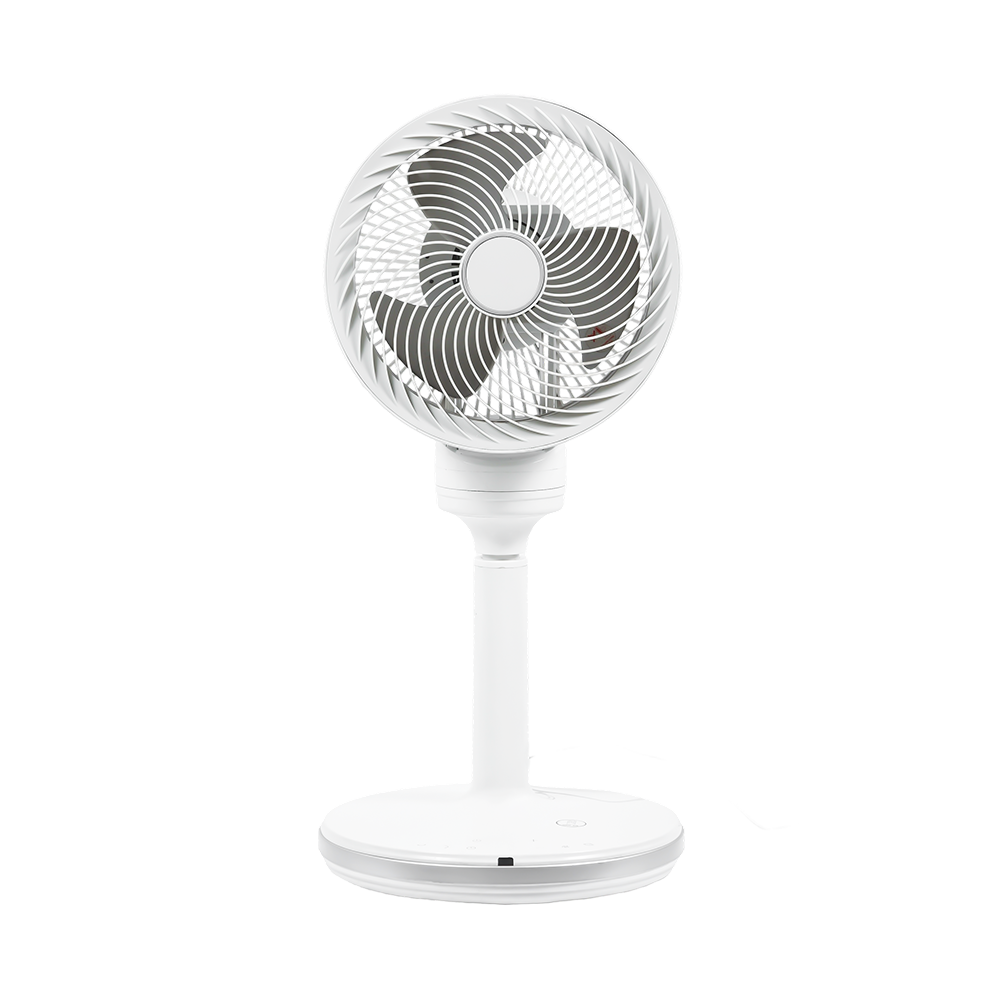
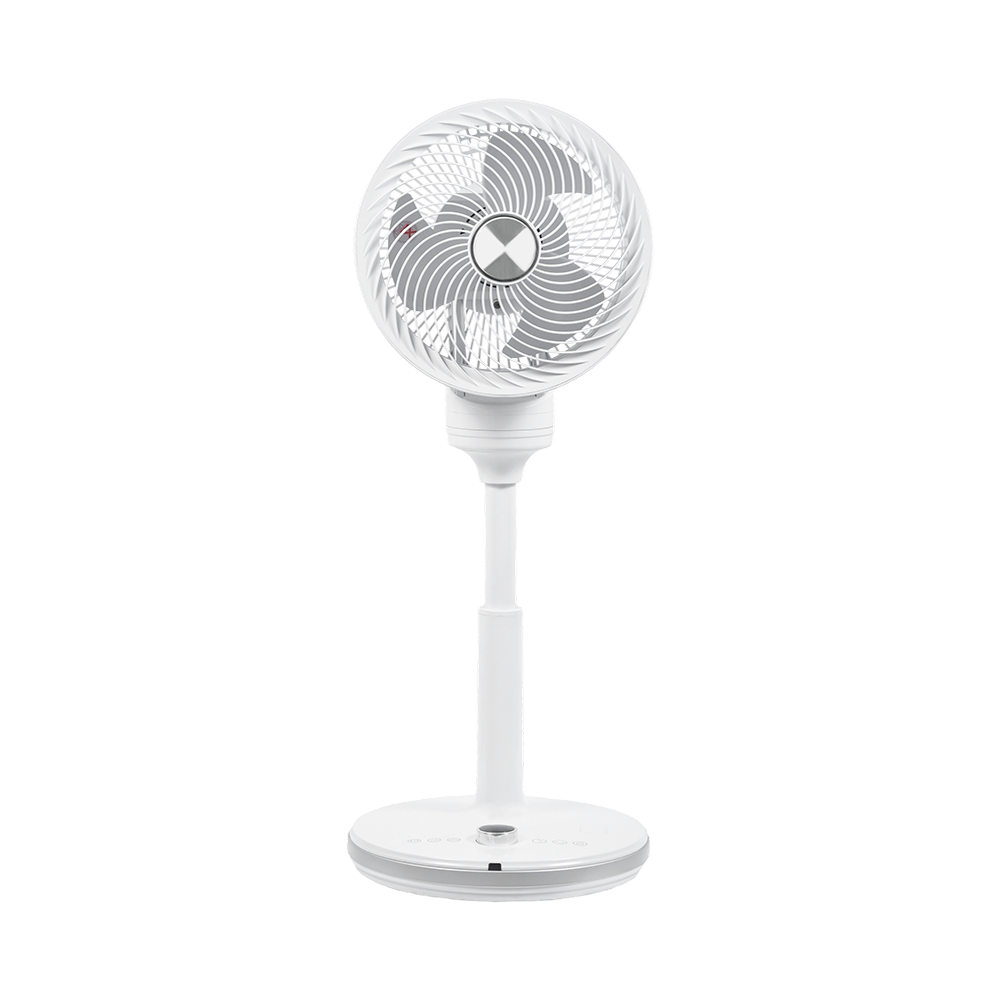
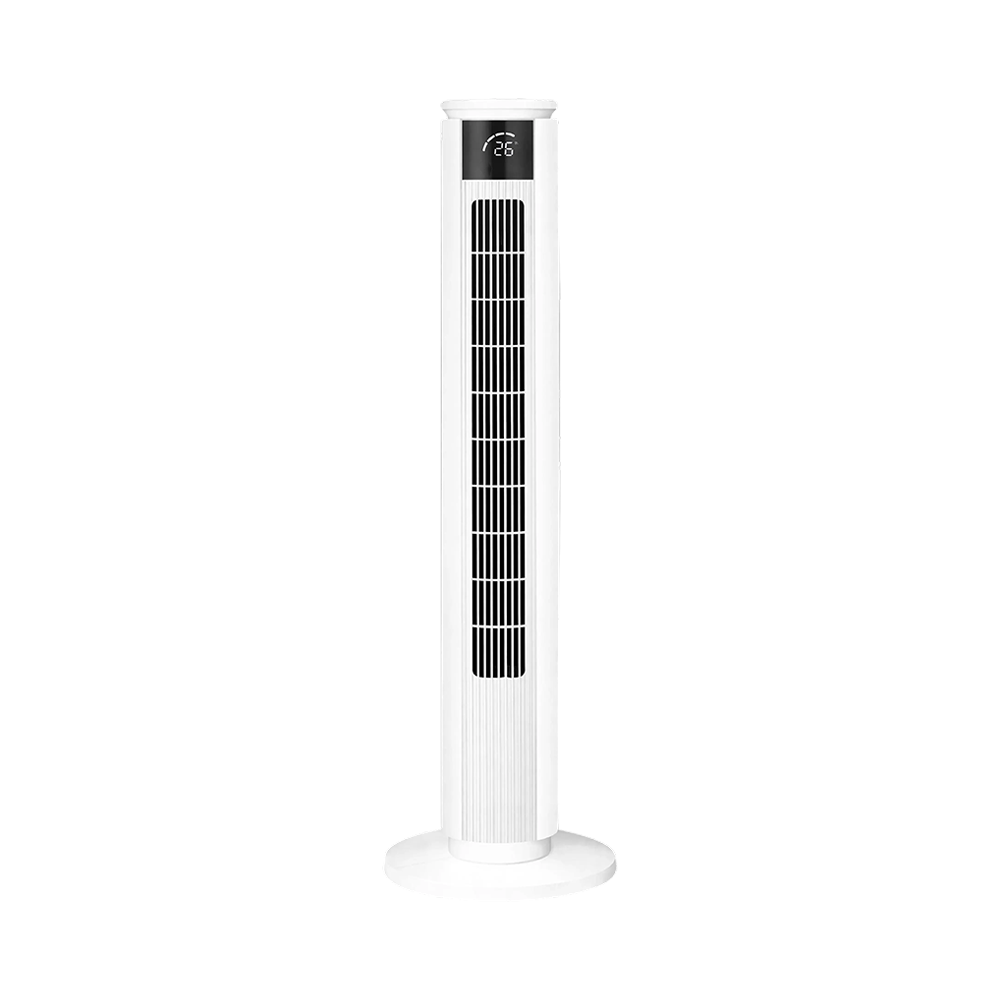 8-Speed Oscillating Tower Fan with Infrared Remote and Sleep ModeThis tower fan suits year-round comfort during warm months with multiple speeds, oscillation, and a quiet impeller design. Its safety features and auto-off timer make it a practical choice for homes with children or pets.View Product →
The most common advice on forums is to skip the 2-in-1 and buy a dedicated fan plus a cheap space heater. That advice is logical on paper: a good box fan moves more air per watt than a tower, and a space heater is simpler and cheaper to replace. But the comparison changes once you add floor space, clutter, and convenience.
A heated tower fan occupies one footprint of roughly 0.5 to 0.8 square feet and a vertical space about 38 to 42 inches tall. A separate pedestal fan plus a space heater needs two storage spots, two power cords, and two wall outlets, and it takes twice as long to set up and put away at each season change. For a small apartment, a student dorm, or a home office, that convenience is not trivial.
| Factor | Heated tower fan | Separate fan and heater |
|---|---|---|
| Typical cost | $70 to $130 | $50 to $110 total |
| Floor space | One unit, under 1 sq ft | Two units, plus cords |
| Maximum heat output | 1500 W (5118 BTU/h) | Heater alone 1500 W or more |
| Summer airflow | Good; quieter bladed design | Higher CFM possible with box fan |
| Noise in heat mode | 35 to 55 dBA depending on speed | Oil radiator silent; fan heater similar |
| Best use case | Bedrooms, studies, dorms, studios | Large living rooms, workshops |
The all-season angle matters too. A dedicated fan sits unused for half the year, and a space heater sits unused for the other half. A heated tower fan earns its storage space year-round, and you only need to remember one remote control, one timer, and one safety checklist. Some tower heaters even add a humidifier function, which makes the dry winter air easier to live with.
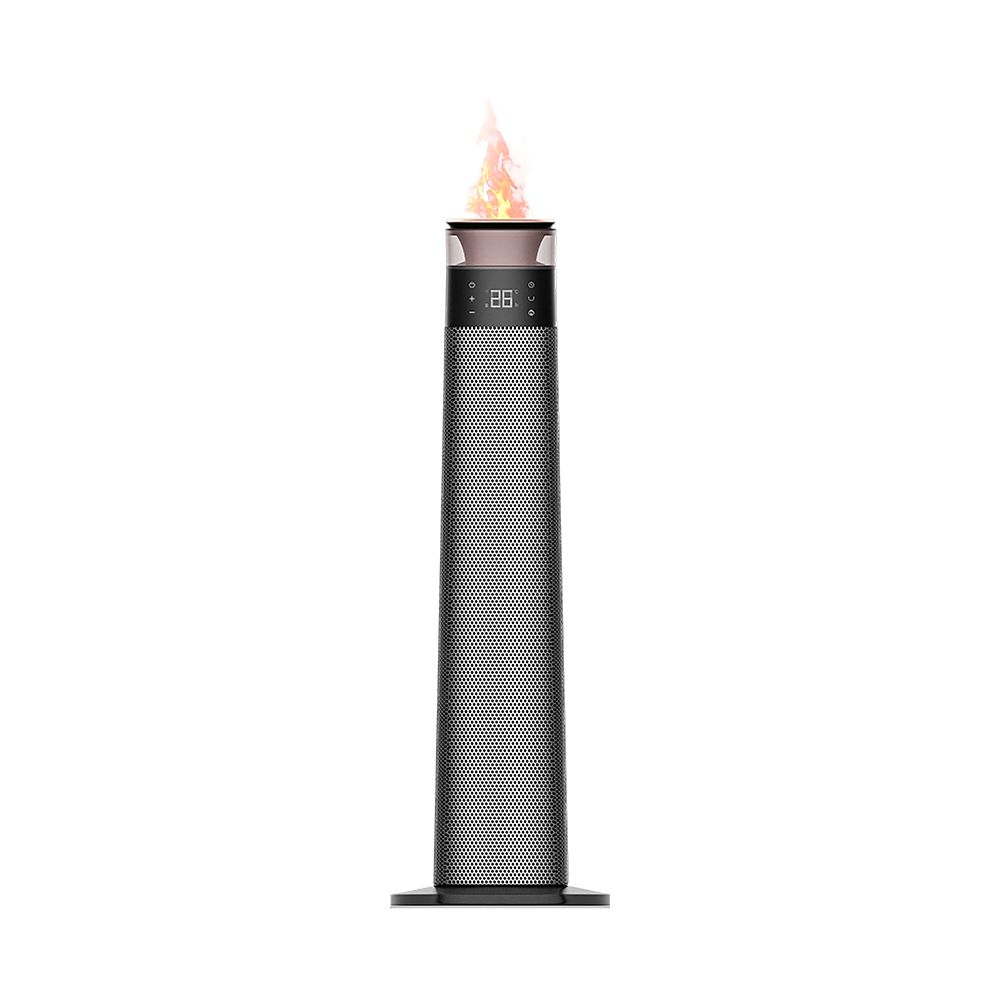 2200W Heated Tower with Humidifier and Dual-Color Flame EffectThis all-season unit combines efficient PTC heating, a 220ml humidifier for dry winter air, and a calming flame effect. It offers cool and warm settings, a 24-hour timer, and child lock for convenient, safe use.View Product →
Manufacturers describe the same product differently from one retailer to another. Focus on the numbers and controls below, and you will avoid most of the marketing traps. You can also check the spec columns in our full product catalogs to see how models compare side by side.
| Spec | Why it matters | Good target |
|---|---|---|
| Heating wattage | Decides heat output and room coverage | 1500 W, or dual 750/1500 W switch |
| Number of fan speeds | More speeds mean finer control of airflow and noise | 8 to 12 speeds |
| Noise level | High dBA at low speed makes sleep harder | Under 45 dBA at low speed |
| Oscillation range | Wider sweep spreads warm or cool air more evenly | 60 to 90 degrees |
| Thermostat | Switches off when target temperature is reached | Adjustable setpoint with temperature display |
| Timer | Prevents running all night; useful for sleep | 1 to 12 hours, or weekly schedule |
| Remote control | Lets you adjust without leaving bed or desk | Included; infrared is fine, Wi-Fi optional |
One trap to avoid: some products advertise "heater mode" but only deliver 750 W. At that wattage, the unit is fine as a personal desk warmer but will struggle to heat a full bedroom. Check the wattage on the specification sticker, not the marketing page. Also confirm the base footprint: a narrow 22 cm base is easier to tip, so a wider base with a low center of gravity is a practical plus.
A widely used residential sizing rule is about 10 watts per square foot for a normally insulated room with 8-foot ceilings. That means a 1500 W heated tower fan comfortably covers 150 sq ft; it can stretch to 200 sq ft if the room has no large windows or drafty gaps, and it drops to about 120 sq ft of effective coverage if the ceiling is 10 feet high.
| Room size | Recommended wattage | How to use the tower |
|---|---|---|
| Under 100 sq ft | 750 to 1000 W | Half power or low heat mode |
| 100 to 150 sq ft | 1500 W | Full power, oscillation on |
| 150 to 200 sq ft | 1500 W plus good airflow | Full power, keep doors closed |
| Over 200 sq ft | 2000 W or a second heater | Consider baseboard or oil radiator |
Tower fans heat by convection, meaning they rely on moving warm air through the room. If the room is drafty or connected to an open staircase, the effective coverage drops noticeably. Closing interior doors and sealing window gaps does more for comfort than upgrading from 1500 W to a slightly higher advertised rating.
Ceiling height also shifts the numbers. In a room with 10-foot ceilings, direct the oscillation horizontally at chest level rather than upward, so warm air is pushed outward first and rises naturally. For larger spaces, a high-output tower heater is a better fit than a standard 2-in-1.
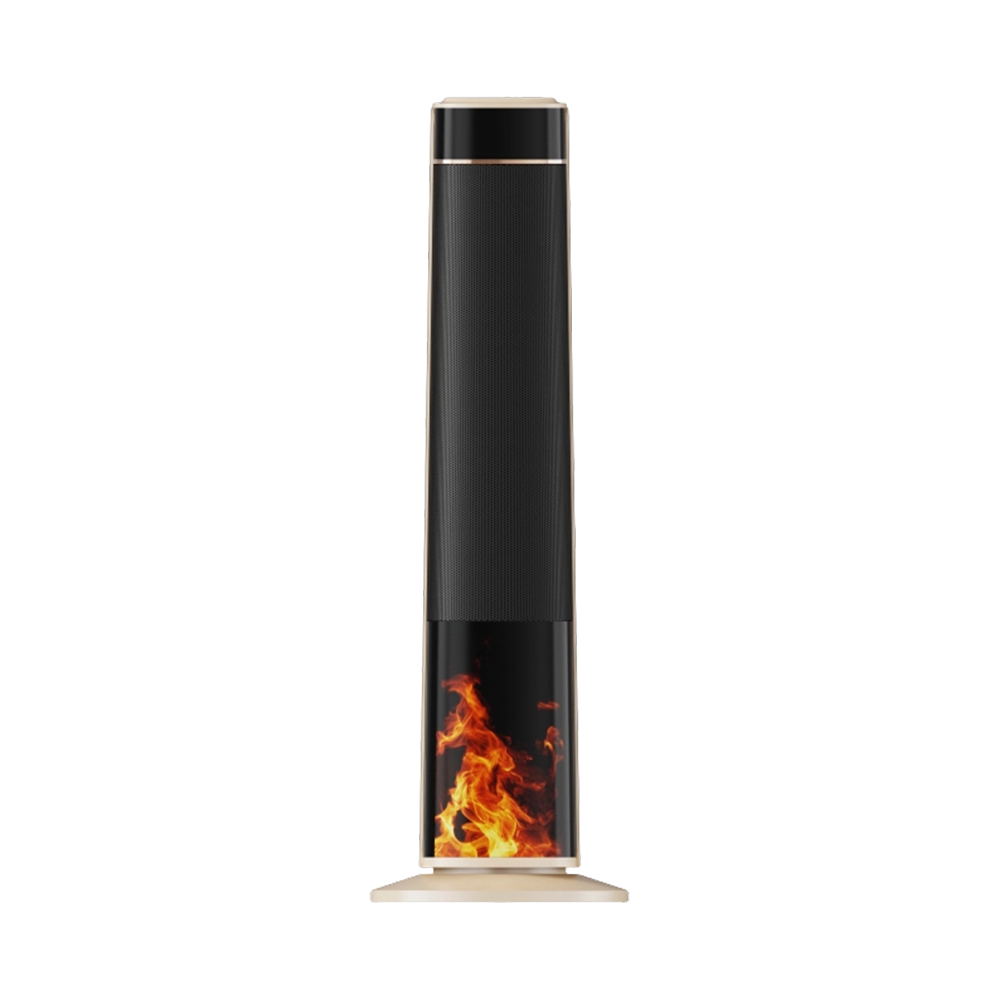 2200W Tower Heater with Simulated Flame, Plasma Purifier, and TimerThis high-output heater delivers rapid PTC warmth with a realistic faux-log flame visual. It includes two heat levels, precise temperature control, an energy-saving mode, and plasma purification for improved air quality.View Product →
A heated tower fan concentrates a high-current heating element in a slim plastic body, so safety features are not optional. Before buying, confirm the following are present and not just mentioned in a slogan:
Placement is just as important as built-in features. Keep the unit at least 1 meter (3 feet) away from curtains, sofas, duvets, and paper, and never face the intake toward a wall. Covering the intake starves the airflow, makes the element work harder, and can deform the plastic around the outlet. On carpets, place a hard board or tray underneath so the base cannot sink into the pile.
Resistive electric heaters all convert roughly 99 percent of electricity into heat, whether the element is PTC ceramic, quartz, or a metal coil. So when a product claims to be "more efficient" than another heater type, what it usually means is that it has a thermostat or better airflow, not that the heating element itself makes better use of electricity. The real cost driver is how long the unit runs.
A simple formula gives a realistic estimate: wattage times hours divided by 1000, multiplied by your electricity price. A 1500 W tower running continuously for one hour costs roughly $0.225 at a typical residential electricity rate of about $0.15 per kWh, a common benchmark in US energy pricing data. Run it 6 hours a day for 30 days at full power, and the monthly figure is about $40.50. Switching to 750 W mode cuts that roughly in half.
The thermostat is where real savings come from. Suppose a 120 sq ft bedroom takes the first hour to warm from 15 C to 21 C, then the unit cycles on only 10 to 15 minutes each hour to hold that temperature. The total energy for a 6-hour evening falls by roughly 40 to 50 percent compared with running continuously. Use the timer when you tend to forget to switch it off; auto-shutoff at the end of the night is the simplest energy saving of all.
How you set up and maintain a heated tower fan affects both safety and longevity. These are the habits that matter in daily use:
A slight smell of dust on the first heat use of the season is normal and fades within 15 to 20 minutes. If a burning smell returns every time you switch to heat, there is likely dust trapped on the element or a failing component, and the unit should be retired rather than repaired at home.
For a room up to about 150 to 200 sq ft, yes. A 1500 W PTC tower provides the same heat output as a standard 1500 W space heater. For larger areas, a specialist heater with more wattage is a better fit.
It is safer when the model has overheat protection, a tip-over switch, and a timer. Use the 750 W or eco mode at night, set a sleep timer, and keep the unit away from bedding. Never leave it running unattended with flammable items nearby.
Roughly $0.225 per hour at 1500 W with an electricity price of $0.15 per kWh. Half that in 750 W mode, and less again once the thermostat starts cycling.
Any forced-air heater moves air and increases moisture evaporation from skin, so some dryness is possible. PTC elements do not burn oxygen, unlike older combustion-style heaters. Some tower heaters include a humidifier function to offset this.
A 1500 W unit reliably heats 100 to 150 sq ft with standard insulation, and can stretch to 200 sq ft if the room is sealed and the tower oscillates freely. Lower wattage or draftier rooms reduce that range.
Yes. That is the main benefit of a 2-in-1: the same unit works as a standard tower fan in summer. Just switch the mode button to fan-only and select your speed and oscillation.
If you have further questions about specifications, lead times, OEM projects, or warranty support, check our FAQ page for manufacturer-level answers.
A heated tower fan earns its place when your space is small or medium, your storage is limited, and you want year-round usability from a single device. Check the wattage first (1500 W is the practical standard), make sure the noise level works for where you sleep, treat tip-over and overheat protection as mandatory, and clean the intake every two weeks.
From our side, as a manufacturer that has built tower fans and heaters for brands in Europe, North America, and Asia since 2002, the current generation of 1500 W PTC heated towers is more reliable and more consistent than anything from a decade ago. Buy on the numbers rather than the slogans, and one good unit will carry you through many seasons.
Don't hesitate to contact when you need us!
For any questions and feedback from customers, we will reply patiently and meticulously.

The product has obtained multiple domestic and international certifications, including 3C, CE, ROHS, CB, and the ISO9001 quality management system.
CONTACT US
Address: No. 118, Guyao Highway, Zhangqi Town, Cixi City, Zhejiang Province, China
Wechat: +86-15921162693
Email: [email protected]
Mobile



 English
 Español
 عربى