
Nov 02, 2026
Content
A 30 cm bladeless loop can outperform a 40 cm pedestal fan, and it does it with no visible blades, no grille to scrape clean, and a footprint small enough to sit on a desk. That is the practical claim behind the air multiplier fan. The mechanism is real: a small impeller hidden in the base pushes a modest amount of air through a narrow slit, and the jet leaving that slit drags a far larger volume of room air along with it.
Here is the conclusion first. Choose an air multiplier fan on three measured numbers, not on looks: total airflow at each speed in CFM or litres per second, sound pressure at one metre in dB(A), and power draw in watts. A loop that moves 90 CFM is a personal cooler. The same loop with a stronger impeller and a wider slit can move 400 CFM and carry a small bedroom on its own. Oscillation angle, control type and price band all matter far less than airflow, noise and wattage.
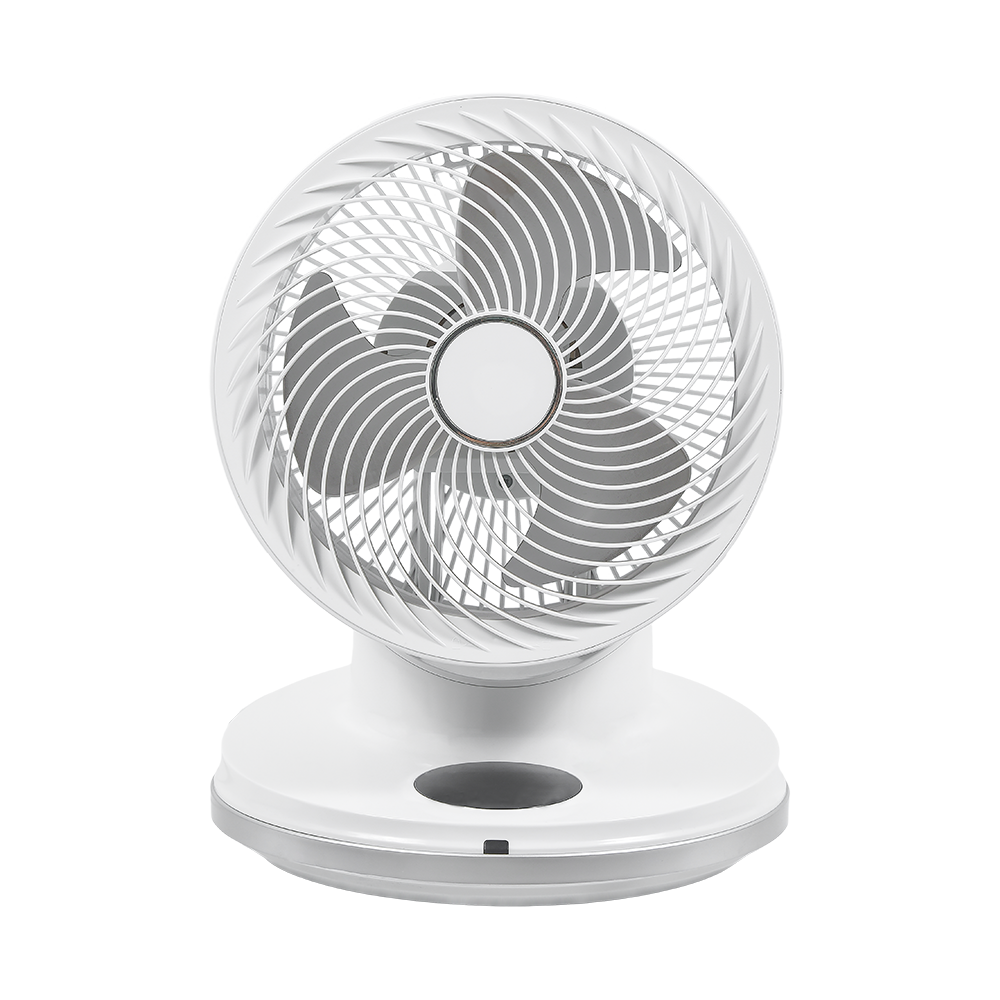
An air multiplier fan is a bladeless fan: a loop or ring mounted on a base that holds the motor and impeller. Nothing spins inside the loop. The moving parts sit in the base, pulling room air through slots and pushing it into the hollow ring, where it escapes through a slit that runs around the inner edge. The word "multiplier" describes what happens after that air leaves the slit, not inside the base.
Three very different products get mixed together in this category, so clear it up early. An air multiplier fan only moves air. It is not a purifier and it is not an air conditioner, because the air leaving the loop is the same temperature as the air entering the base. Comfort comes from air speed across your skin. ASHRAE Standard 55 allows elevated air speed to offset the cooling setpoint by up to roughly 2.8 degrees Celsius, which is why a room set at 26 can feel like 23 once the air is moving.
Three effects stack on top of each other. First, the impeller and slit create a primary jet at high velocity, typically tens of metres per second at the slit exit. Second, that fast sheet of air drags air from behind the loop forward, an effect called induced flow. Third, the still air surrounding the jet is pulled along by friction, which is entrainment. The visible loop is mostly a duct and a nozzle; the multiplication happens in the air around it.
Published multiplication factors usually sit between 5 and 15 times the primary airflow. Those numbers come from manufacturers' own testing, so treat them as claims rather than guarantees. The arithmetic still shows why the design works: if a base impeller moves 30 litres per second and the multiplication factor is 8, total output is about 240 litres per second, which converts to roughly 508 CFM at 1 litre per second equals 2.119 CFM. That is illustrative arithmetic, not a measured result for any specific model.
This also explains why bladeless fans feel different from propeller fans. The output is a wide, low-turbulence sheet of air rather than a narrow column. It feels smooth at two metres and weak at four metres, because the jet mixes with still air and loses velocity quickly. When you compare two loops of similar diameter, ask about slit width and impeller diameter, not just the loop.
The table below puts the common household options side by side on the points that decide whether a fan works in a real room. The ranges are typical figures taken from manufacturer datasheets and general industry practice, not values for one specific unit, so use them for orientation before you request measured data.
| Design | Airflow pattern | Typical output | Noise at 1 m | Exposed blades | Cleaning effort |
|---|---|---|---|---|---|
| Air multiplier (bladeless) | Wide, smooth sheet with entrainment | 100 to 500 CFM | 25 to 45 dB(A) | None | Wipe loop, vacuum base intake |
| Pedestal or desk fan | Directional, turbulent column | 300 to 1200 CFM | 35 to 55 dB(A) | Guarded blades | Remove grille and blades |
| Circulator fan | Tight, high-velocity jet | 200 to 900 CFM | 35 to 55 dB(A) | Guarded blades | Grille and blade wipe |
| Tower fan | Tall, diffuse, low velocity | 150 to 500 CFM | 30 to 50 dB(A) | Hidden inside housing | Difficult, needs slim vacuum tool |
| Wall or ceiling fan | Broad, sweeping coverage | 1000 CFM and above | Depends on speed and mounting | Mounted above reach | Ladder work, occasional wipe |
Sizing a fan is not the same as sizing an air conditioner. You are not trying to remove heat, you are trying to create enough air speed where people sit and enough mixing that no corner stays stale. Five steps cover most homes and small offices.
Converting the numbers into model choice is straightforward. The 68 CFM figure is the bare mixing minimum, so a floor-standing model rated 250 to 350 CFM on high gives a useful margin for a room that size and enough headroom to run on a mid speed overnight. A desk model rated under 120 CFM suits a position within arm's reach, not a whole room.
Spec sheets usually list one dB(A) figure, measured at one metre, and almost always at the lowest speed. That single number tells you very little about the setting you will actually live with, because the jump between speed one and speed five on a small impeller is often 15 dB or more.
For practical targets, keep a bedroom unit under about 35 dB(A) at one metre on the speed you plan to sleep with, and under 45 dB(A) for a living room. Ask for sound data at every speed and, where possible, a sound power figure as well as sound pressure, because sound power does not change with the measurement room.
AC motors are simple and cheap, usually with three speeds and a fixed minimum speed that is already audible. DC brushless motors typically offer five to twelve speeds, a lower and quieter minimum speed, and lower wattage at the same comfort level. That difference shows up on the electricity bill.
Take a season of 120 days at 8 hours a day. A 40 W AC bladeless fan uses about 38.4 kWh, while a 12 W DC unit uses about 11.5 kWh. At 0.15 USD per kWh that is roughly 5.80 USD against 1.70 USD for the season. Assumptions are stated plainly: same daily runtime, same comfort level, electricity price fixed.
Efficiency per unit of airflow matters more as rooms get bigger. If a space genuinely needs 500 CFM, one 40 W bladeless unit may not deliver it, and running two units at 80 W total is a worse answer than a single larger air mover running at 60 W. Match the appliance to the airflow job rather than to the room's decor.
A bladeless fan works best as a local air mover. Place it 1.5 to 2.5 m from the person, slightly off-axis, so the sheet of air passes across the body instead of blasting the face. Leave about 30 cm of clear space behind and around the base, because the intake needs unrestricted air to feed the impeller. Push the base into a corner and airflow drops while noise rises.
Oscillation at 70 to 90 degrees covers a small room comfortably, but a stationary position always gives the strongest air speed at one seat. If more than one person shares the room, run the sweep and accept a slower air speed at each seat.
Rooms longer than about five metres need a partner. A circulator fan aimed along the long axis produces a tight, high-velocity jet that pushes air the length of the room, while the bladeless unit handles comfort at the seating position.
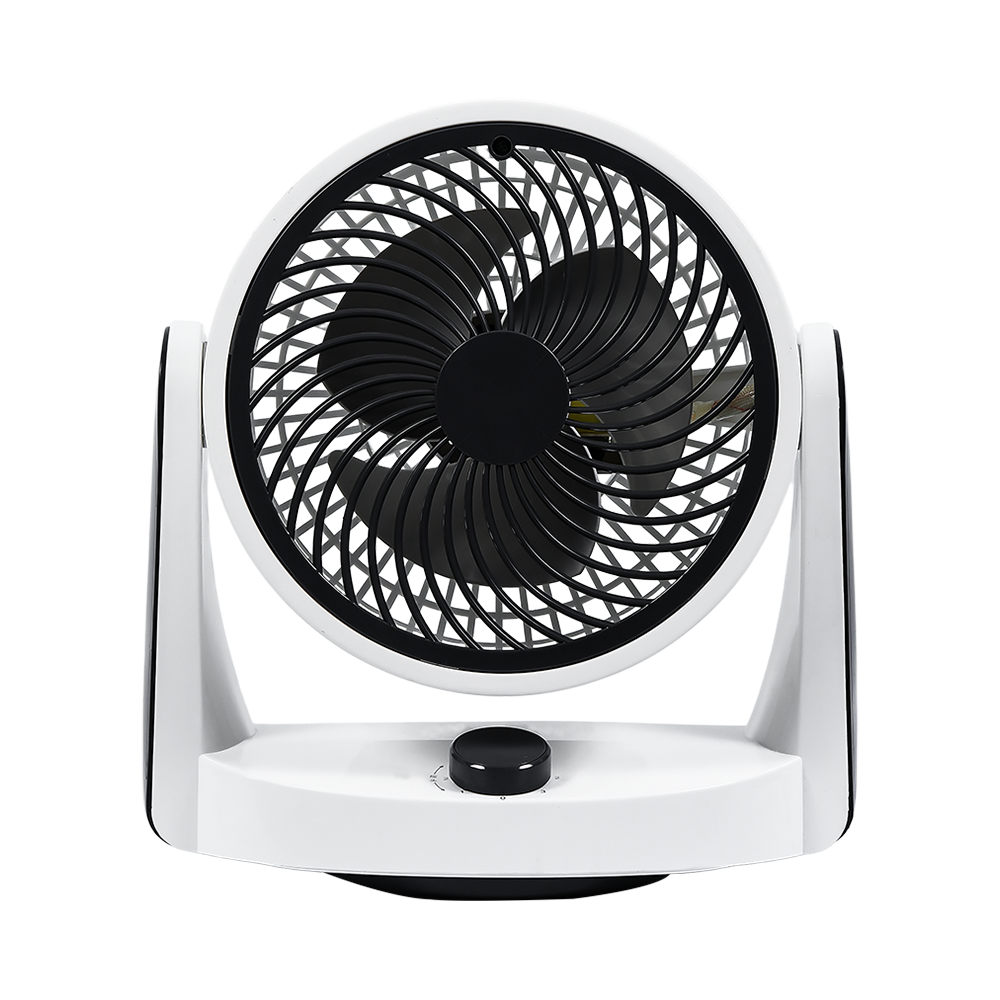
DC circulator models of this type run on low wattage and hold several speeds, which makes them practical for overnight use in the same room as a bladeless unit without adding much noise.
Tower versions hide the impeller in a slim column and release air through a tall, narrow outlet. The result is a diffuse curtain of air rather than a focused jet, which suits sitting areas where you want movement without a direct draught. Output is usually lower than a loop-type bladeless fan of similar height, and the internal passages are harder to clean.
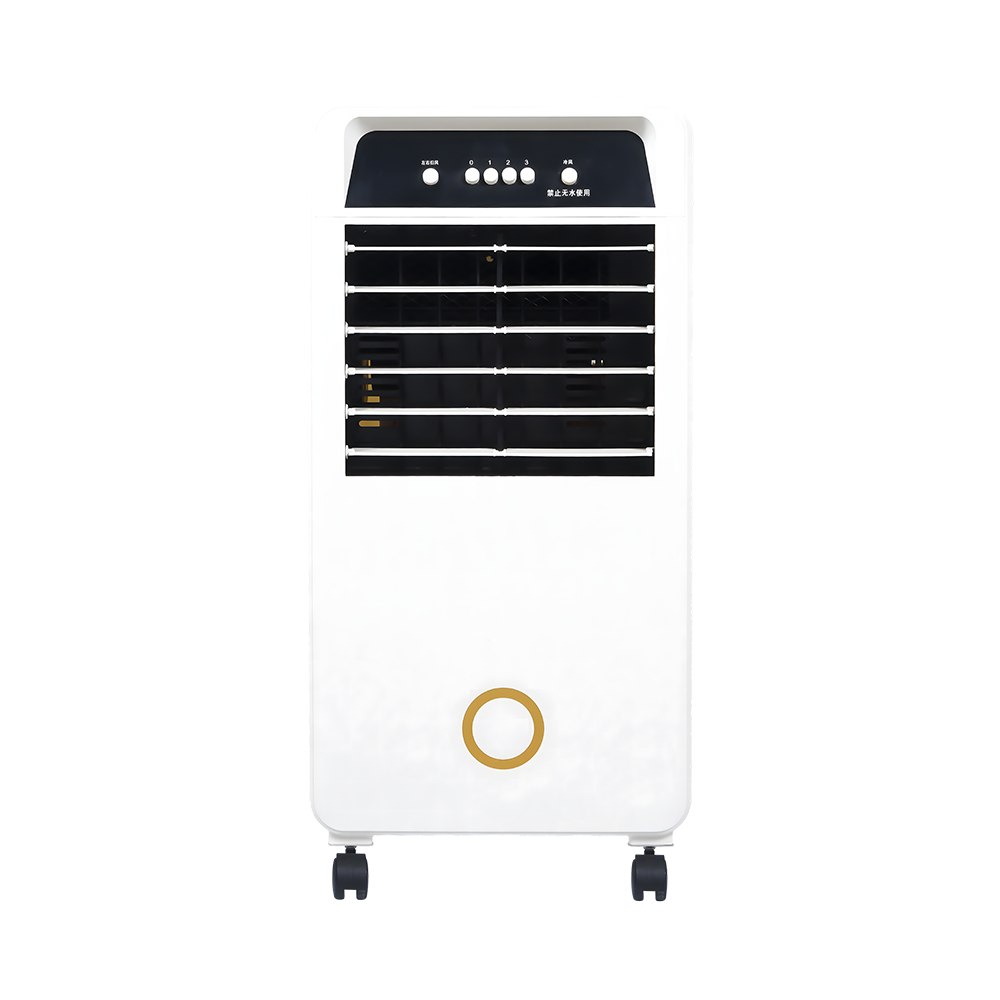
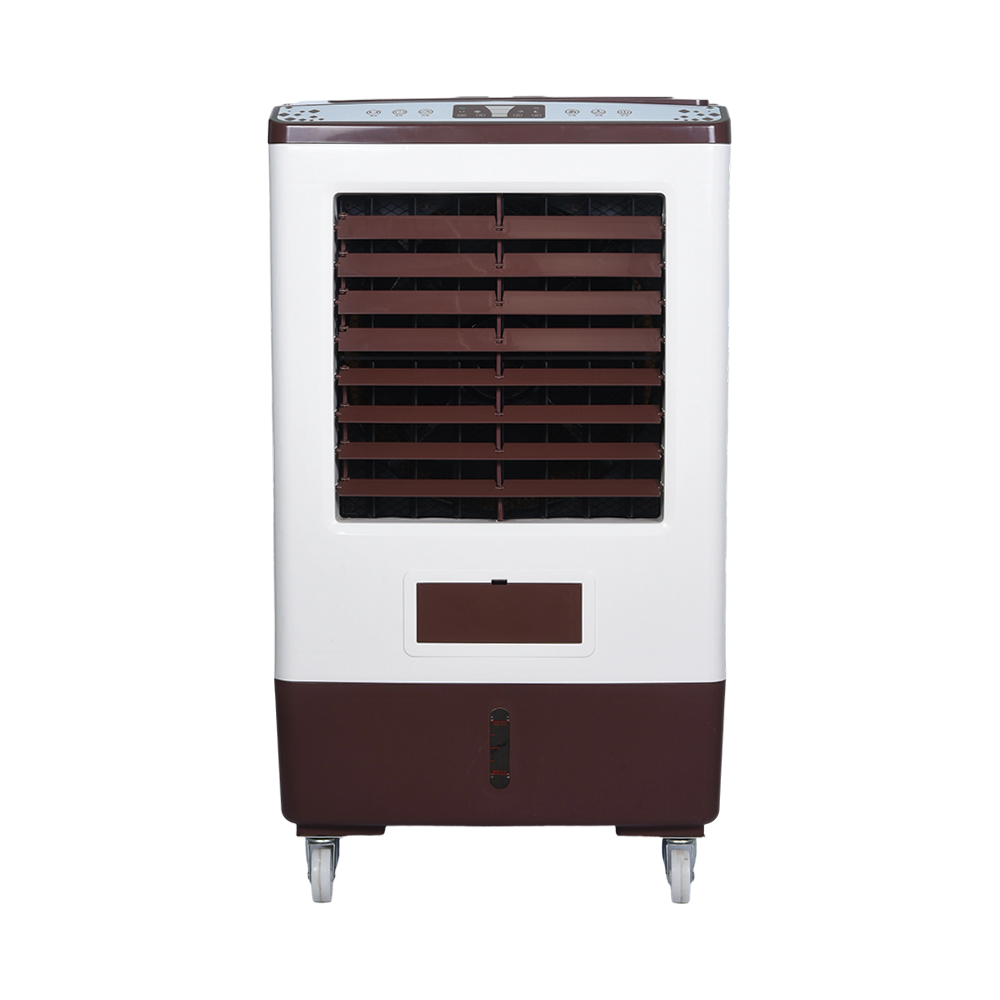
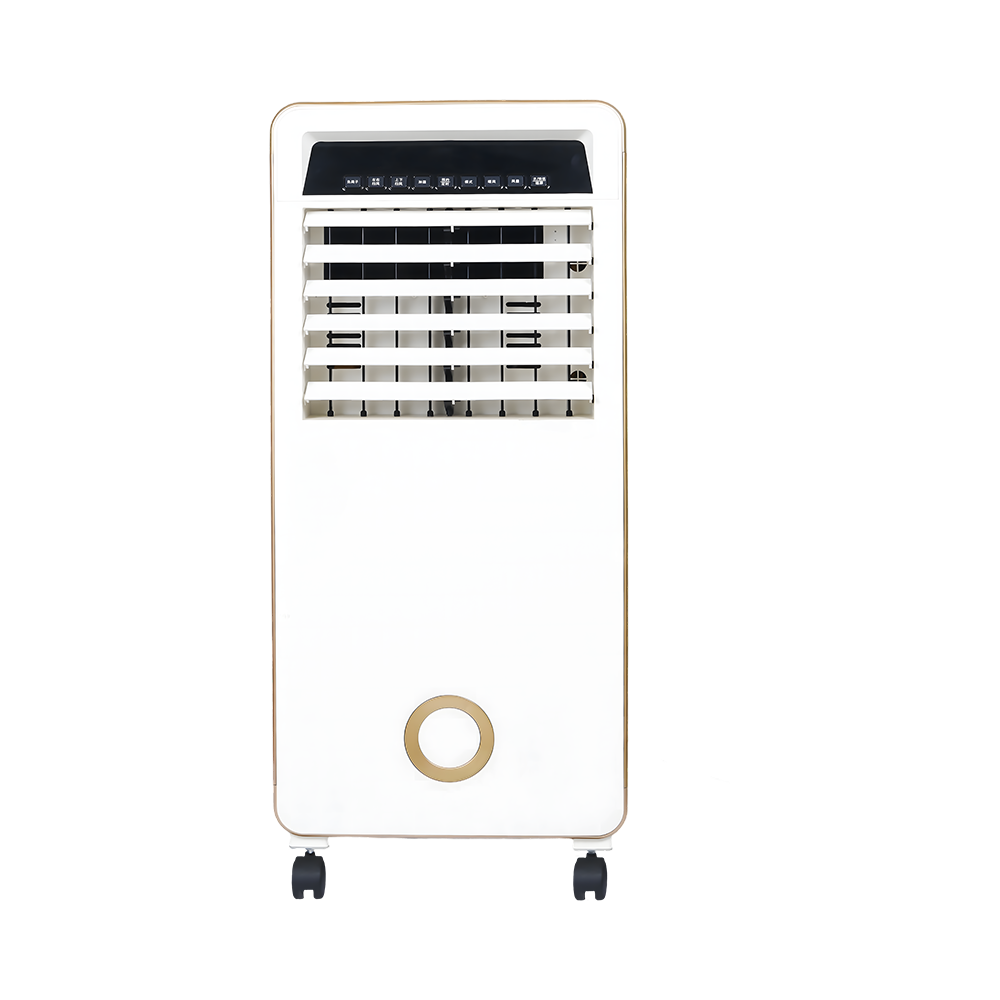
An air cooling tower fan adds evaporative media and a water tank. Air passes over wet pads, so the delivered air is a few degrees cooler and noticeably more humid, which works well in dry climates and poorly in already humid ones. A 5 to 12 litre tank typically covers 4 to 8 hours of running, and the airflow falls as mineral scale builds up in the pads.
Units in this format are best specified with a stated tank capacity, a stated pad type that can be replaced, and airflow figures taken with the pads in place rather than with dry media.
The loop-and-base architecture is not limited to cooling. The same housing logic carries a PTC ceramic element and blows warmed air through the ring, which is how bladeless heaters are built. Typical household versions draw 1.3 to 2.2 kW, which is forty to sixty times the wattage of a cooling fan, so circuit capacity rather than airflow becomes the first consideration.
Buyers choose this format for two reasons: there is no glowing element inside reach, and the outer surfaces stay relatively cool during operation. Those points matter in households with small children or pets. The trade-off is a smaller heated air volume than a baseboard heater of comparable wattage, because the fan-assisted design heats the air it moves rather than the whole wall.
Bladeless heater models in this range combine the loop housing with a fan-assisted PTC element, so the same tooling and sheet metal know-how used for cooling loops carries directly into the heating line.
Dust is the main enemy of a bladeless fan, and the slit is where it hurts. A film of dust on the slit edge roughens the jet, which usually shows up first as extra hiss at low speed and later as reduced airflow at every setting.
Retail buyers and trade buyers ask the same questions, just with different budgets behind them. The list below works for a single unit and for a container load.
For a manufacturing partner, the questions shift towards tooling, process control and repeat order consistency. Ningbo Baopeng Electric Appliance has run seasonal appliance production since 2002, with a 17,000 square metre plant and more than 200 staff, and the company background is set out on its about page. The supplier's own customer base and process discipline usually tell you more about repeat quality than any single sample.
Specification sheets, fan and heater catalogues and common questions are collected on the product catalogues and downloads page, which is the fastest way to compare rated airflow and wattage across a full range before shortlisting models.
No. It moves air that is already in the room, and the temperature of that air is unchanged. The cooling sensation comes from air passing over your skin, which speeds up evaporation and heat loss. In a sealed room the temperature will stay the same or rise very slightly from motor heat.
Not automatically. At very low speeds many bladeless units are extremely quiet, but a small impeller spinning fast to reach higher airflow produces more high-frequency noise than a large propeller turning slowly. Compare dB(A) figures at the same airflow, not at the same speed number.
Desk models commonly land between 90 and 200 CFM, while floor-standing loops reach roughly 250 to 500 CFM depending on impeller size and speed. Anything above 500 CFM from a single household loop is unusual, so large rooms usually need a second air mover.
Yes, if the unit stays under about 35 dB(A) at one metre on the speed you plan to use. A DC motor with a genuinely slow first speed is the practical requirement here, plus a power draw low enough that you are comfortable leaving it on for eight hours.
Not normally. Most have no filter and rely on an open intake, which is why the intake slots and the loop slit need regular cleaning. A clogged intake is the most common cause of a fan that seems to have lost power after a year of use.
The lack of exposed blades is a real advantage, because there is nothing to reach into while the fan runs. The counterpoint is stability: a tall loop on a light base can be knocked over, so check the base weight and footprint before buying for a busy room.
It can handle local comfort at one or two seats. Whole-room mixing at that size needs either several air movers or a combination of a floor-standing loop for comfort and a circulator fan for air distribution along the length of the room.
Don't hesitate to contact when you need us!
For any questions and feedback from customers, we will reply patiently and meticulously.

The product has obtained multiple domestic and international certifications, including 3C, CE, ROHS, CB, and the ISO9001 quality management system.
CONTACT US
Address: No. 118, Guyao Highway, Zhangqi Town, Cixi City, Zhejiang Province, China
Wechat: +86-15921162693
Email: [email protected]
Mobile



 English
 Español
 عربى