
Nov 09, 2026
Content
A fan motor heater is a space heater in which a small electric motor drives a blower wheel or an axial fan, forcing air across a heated element and out into the room. Two numbers decide whether the person using it is satisfied: the wattage of the element and the airflow the motor can deliver at that wattage. A 2000 W element paired with a weak blower can leave the far corner of a 20 m2 room cool, while a well matched 1500 W fan heater moving 60 to 90 m3 of air per hour will usually bring a 12 to 15 m2 bedroom to comfort in about ten minutes.
Motor choice matters as much as watts. The motor sets the noise level, the bearing life, the duty cycle the unit can survive, and how much of the electrical input ends up as moving air instead of waste heat inside the housing. Getting the motor and element combination right is the difference between a heater that lasts two winters and one that lasts ten.
This article covers how a fan motor heater works, which motor and element combinations hold up in real use, how to size wattage against room volume and insulation, what to check at installation, and what a purchasing team should write into a specification. The benchmarks used below are typical values from small appliance manufacturing practice and from the heater range produced by Ningbo Baopeng Electric Appliance, a seasonal appliance manufacturer that has built fans and heaters since 2002 and describes its factory, staffing and process controls on its about page.
Radiant heaters warm surfaces that sit in the line of sight. Fan heaters warm the air and then mix it. That difference shows up clearly in a 4 m by 5 m living room, where the vertical temperature spread is the number that determines whether people feel warm. With a radiant panel, air near the ceiling is commonly 4 to 6 degrees C warmer than the air 10 cm above the floor. With a fan heater that keeps the air moving, the spread usually narrows to 2 to 3 degrees C, which is why the same perceived comfort can be reached with roughly 10 to 20 percent less rated wattage.
The trade-offs are noise and air movement. Most portable fan heaters run between 38 and 55 dB(A) at one metre, measured with the element on. That is unremarkable in a workshop and very noticeable in a bedroom at night, so a unit with a genuine low speed mode and a thermostat that switches the element rather than the motor is usually the better choice for sleeping areas.
A 2 kW fan heater is the wrong tool for a large uninsulated hall, where heat loss can exceed 5 kW at design conditions. It is also a poor fit for quiet bedrooms when the only available model runs at 55 dB(A). In both cases the honest answer is a bigger heat source or a quieter one, not a stronger fan.
Two motor families cover almost the entire market for fan motor heaters: shaded pole AC motors and brushless DC motors. They look similar from the outside and behave very differently over a service life.
This is the classic choice for low cost heaters. There are no electronics, the motor runs directly from mains voltage and the cost is a fraction of a DC solution. The weaknesses are efficiency, typically 20 to 35 percent, and a speed that is fixed by supply frequency, so airflow control is limited to a second winding tap or an extra blower position. Service life in continuous duty commonly falls in the 1000 to 3000 hour range. That is generous for a portable unit used two hours a day for one season, roughly 300 hours, and marginal for a workshop unit running eight hours a day.
A brushless DC motor in a heater is driven by a small inverter board that converts mains voltage to a low voltage DC rail. Efficiency is usually above 70 percent, speed control is smooth and stepless, and typical service life is several times that of a shaded pole unit. The cost premium is real, and so is the payoff. At the same airflow, a brushless fan is typically 3 to 7 dB(A) quieter and draws far less power to move the same volume of air. Over a five month winter at eight hours a day, that gap is easy to justify.
| Motor type | Typical efficiency | Noise at 1 m | Speed control | Typical service life |
|---|---|---|---|---|
| Shaded pole AC | 20 to 35 percent | 45 to 58 dB(A) | Stepped, one or two speeds | 1000 to 3000 hours |
| Brushless DC | 70 to 85 percent | 35 to 48 dB(A) | Stepless, often five or more steps | 8000 to 15000 hours |
The element decides how heat is generated and how the heater behaves when airflow drops. Four families cover the majority of fan motor heaters on the market.
A domestic wire element fan heater typically sits in the 1500 to 2000 W band with an airflow of 45 to 90 m3/h, which produces an outlet air temperature roughly 60 to 90 degrees C above the incoming air at full output. A PTC unit in the same wattage band usually settles at a lower outlet temperature and a slightly higher airflow, which is one reason PTC heaters feel steady rather than fierce.
Sizing is a three step exercise: how many watts the room needs at design conditions, how many watts the circuit can supply, and how much air the motor must move to spread those watts evenly.
For rooms with 2.4 to 2.7 m ceilings in a temperate climate, a workable starting rule is 100 W per square metre for moderately insulated buildings, around 70 W per square metre for modern well insulated construction, and 130 to 150 W per square metre for older buildings with single glazing and no cavity insulation. A 15 m2 bedroom in a moderately insulated house therefore lands at about 1500 W, and a 20 m2 living room at about 2000 W.
The plug and circuit often cap wattage before the room does. In 120 V markets, a 1500 W heater draws 12.5 A, which already sits at the 80 percent continuous load limit of a 15 A branch circuit, so most portable heaters sold there stop at 1500 W. In 220 to 240 V markets, 2000 W draws under 9 A, and 2200 W heaters are common on 10 A circuits. Mixing the two conventions inside one product line is a frequent source of returns, so voltage and plug type belong at the top of any specification.
Airflow separates a good fan heater from a mediocre one. Below roughly 40 m3/h, heat concentrates in front of the unit and the rest of the room stays cool. A 2000 W heater moving 80 to 120 m3/h will hold a 20 m2 room within about 2 degrees C from end to end. Higher airflow also lowers outlet temperature at the same wattage, which reduces the dry, over heated air feel that users complain about.
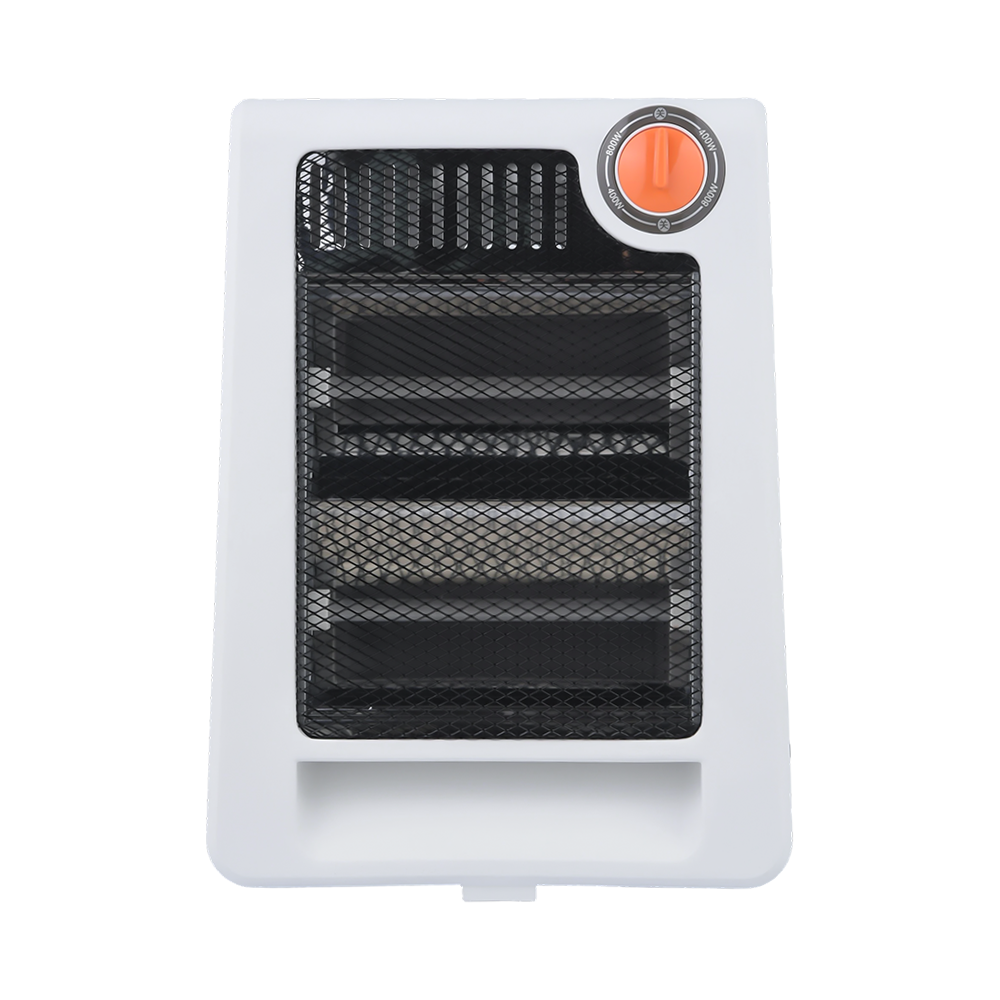
Small rooms do not need a floor standing 2000 W unit. For an 8 to 12 m2 space, a compact graphene mechanical fan heater with a focused outlet often reaches comfort faster and takes far less floor area.
| Room area | Insulation level | Recommended wattage | Suggested airflow |
|---|---|---|---|
| 8 to 12 m2 | Well insulated | 900 to 1200 W | 40 to 60 m3/h |
| 12 to 16 m2 | Moderately insulated | 1500 W | 60 to 90 m3/h |
| 18 to 22 m2 | Moderately insulated | 2000 W | 80 to 120 m3/h |
| 20 to 25 m2 | Poorly insulated | 2200 W | 100 to 140 m3/h |
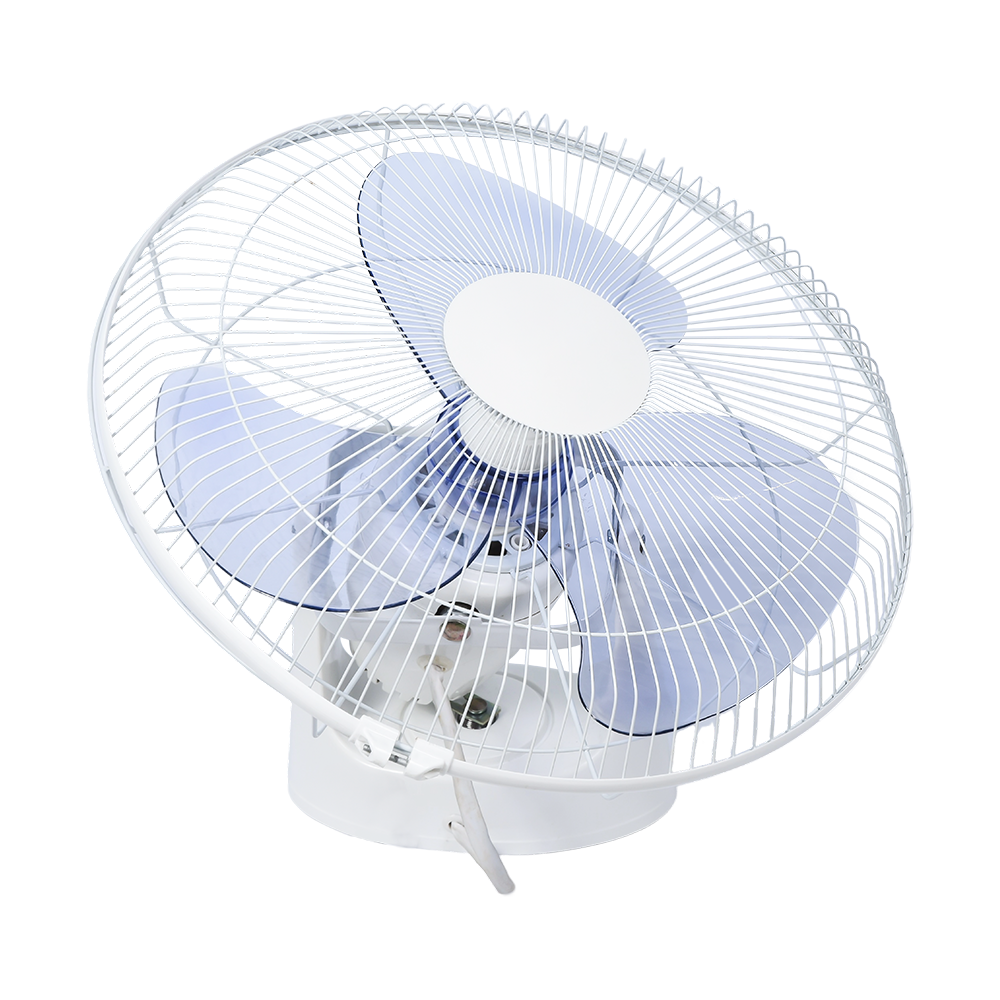
Wall mounted fan heaters free floor space, which matters in hallways, workshops, utility areas and small bathrooms. The engineering constraints change with the mounting position, and most field failures trace back to installation rather than to the product.
The current wall mounted range, including PTC fan heaters with mechanical and electronic control, is documented at model level in the catalogues available on the PDF download page, which is the fastest way to compare wattage, airflow and control options across a full line.
Ask for the measured trip threshold of each interlock. A tip over switch that opens at 25 degrees instead of 15 degrees still passes a basic functional check and still leaves the unit running after it has fallen over, which is exactly the scenario the feature exists to prevent.
In service, four problems account for most complaints about fan motor heaters.
Preventive maintenance is short and cheap. Vacuum the intake and grille every three months in domestic use and every month in workshops, then run the unit for two minutes in fan only mode at the end of the season to clear residual dust from the element and the wheel.
A specification that omits motor life and airflow under load will be filled in by the factory, and the factory will choose the cheaper option. Pin these down in writing, in this order.
Two items on that list, motor life and airflow with the element running, are the ones most often left vague. They are also the two that determine how the product feels to the end user after the first month, once the new owner has stopped noticing the shape of the housing.
It is an electric space heater that combines a heating element with a motor driven fan. The element produces the heat and the motor moves air across it, so the heat is distributed through the room rather than radiating only to nearby surfaces. Almost every portable heater sold as a fan heater, ceramic heater or fan assisted convector uses this arrangement.
Both convert electrical energy to heat at close to 100 percent efficiency, so running cost is driven by wattage and hours of use, not by the technology. The real difference is comfort. Because a fan heater mixes the air instead of creating a 4 to 6 degree C ceiling to floor gap, it can usually hold a room at a lower set point, and that lower set point is where the saving comes from.
About 1500 W is the usual answer for a moderately insulated room with a 2.4 to 2.7 m ceiling, which works out at roughly 100 W per square metre. Reduce that to about 70 W per square metre for a well insulated modern building, and raise it to 130 to 150 W per square metre if the room has single glazing and no cavity insulation.
A light smell on the first two or three uses is normal and comes from residue on the element and protective oil on metal parts burning off. Run the unit in a ventilated room for 15 to 20 minutes at full output. If the smell persists beyond a few uses, or is accompanied by a sharp chemical odour or visible smoke, stop using it and have the unit checked.
Most portable units measure 38 to 55 dB(A) at one metre with the element on. For sleeping, look for a measured figure below 40 dB(A) and a thermostat that switches the element while the fan keeps running at a low fixed speed, because repeated motor start and stop is usually more disturbing than a steady low hum.
The thermal cutout is opening because the element is running hotter than intended. The usual causes are a blocked or dusty intake, a unit placed too close to a wall or curtain, a blower wheel loaded with dust, or a failing motor running below its rated speed. Clean the intake first, restore clearances second, and only then consider the motor.
Choose PTC if the priority is stable output, self limiting behaviour and a gentler outlet temperature, and if warm up time of 60 to 90 seconds is acceptable. Choose a wire element if the priority is the fastest possible warm up and the lowest unit cost, and if the design includes a reliable cutout and a fan run on delay.
A shaded pole motor commonly manages 1000 to 3000 hours of running, which is two to three seasons of normal domestic use. A brushless DC motor typically runs 8000 to 15000 hours. For a workshop unit used eight hours a day, that gap changes the cost calculation completely, because the second motor type often outlives three of the first.
The order of decisions matters more than any single number. Start with the airflow the room needs, then the wattage that airflow has to carry, then the motor that can deliver that airflow quietly for the number of hours the product will actually run. Element type comes after those three, because PTC, wire, graphene and quartz all work well when the fan is matched to the job and all of them disappoint when it is not.
For buyers, the practical takeaway is that a heater specification without a motor life figure and a measured airflow under load is not a specification, it is a wish list. Put both numbers in writing, keep the intake clear in service, and a fan motor heater will hold its output for years rather than for one cold snap.
Don't hesitate to contact when you need us!
For any questions and feedback from customers, we will reply patiently and meticulously.

The product has obtained multiple domestic and international certifications, including 3C, CE, ROHS, CB, and the ISO9001 quality management system.
CONTACT US
Address: No. 118, Guyao Highway, Zhangqi Town, Cixi City, Zhejiang Province, China
Wechat: +86-15921162693
Email: [email protected]
Mobile



 English
 Español
 عربى