
Oct 12, 2026
Content
If you searched for a heated ceiling fan expecting one appliance that both blows air and warms a room, here is the direct answer: integrated heated ceiling fans exist, but they are a rare, mostly commercial niche. In ordinary homes they rarely make sense, because heat rises. A heating element mounted at ceiling height must first warm the air near the roof, not the air near your body.
What actually works is a two-part strategy: a ceiling fan that pushes trapped warm air back down, plus a heater installed at floor or wall level where heat is needed. This guide explains the three meanings of "heated ceiling fan," why combined units fail in most rooms, when a ceiling-mounted heater is justified, and which specifications matter when you buy ceiling fans for year-round heating support.
Three very different products are sold or discussed under the name heated ceiling fan. The differences determine where they get installed, how much they cost to run, and whether they will satisfy a typical heating need.
| Product type | Heating method | Typical locations | Main drawback |
|---|---|---|---|
| Integrated heated ceiling fan | Heating element inside fan body | Niche residential, small commercial | Heat rises; housing is heavy; servicing is harder |
| Ceiling-mounted radiant heater | Infrared quartz or carbon elements | Garages, workshops, terraces, docks | Warms objects, not room air; uneven at room scale |
| Ceiling-mounted fan-forced heater | Blower over resistive heating core | Warehouses, factories, high-bay retail | High power draw; airflow feels noisy and dry |
If you are shopping for a living room or bedroom, none of these is the ideal first choice. The reason sits in basic physics.
Warm air is less dense than cold air, so it rises. Through a heating season, a standard 2.6-metre to 3-metre room develops a temperature difference of roughly 3 to 5 degrees Celsius between the floor and the ceiling. That warmer layer sits above your head, doing nothing for comfort, while the thermostat keeps the heater running.
A heater mounted at ceiling level puts its energy directly into this dead-air zone. The room may feel warm near the crown moulding and still cool at ankle height. That is why a true heated ceiling fan rarely delivers the comfort people expect from the product description.
The U.S. Department of Energy gives consistent residential guidance on the fix: reverse the ceiling fan motor in winter, set it to low speed, and run it clockwise. This creates a gentle updraft in the center of the room and pushes warm air outward and down along the walls, blending the stratified layers without creating a draft.
That habit changes how effectively a floor-level heater works. Without air movement, a baseboard or wall-panel heater relies on weak natural convection, so it runs longer to compensate. A ceiling fan in winter mode recovers trapped heat and shortens heater run time. The saving does not come from the fan motor; it comes from the heater doing less work.
There are genuinely good places for ceiling-mounted heat. Knowing them keeps you from over-ordering or under-specifying a system.
Yet even in these spaces, engineers still add ceiling fans. In a 6-metre-high warehouse, stratification can leave the roof several degrees warmer than the working floor, which forces the heating system to run longer. Air movement is not a competitor to ceiling-mounted heat; it is the missing half of the system.
For bedrooms, living rooms, offices, and most commercial interiors, the practical equivalent of a heated ceiling fan is a two-device system. This is the configuration we recommend most often:
For rooms with ceilings above 2.7 metres, open staircases, or mezzanines, this pairing makes a visible comfort difference in the first week of use.
For rooms that cannot take a downrod fan, a ceiling-mounted fan attaches directly to the ceiling and supplies airflow in both summer and winter modes. It suits bedrooms, kitchens, porches, and commercial spaces with limited clearance.
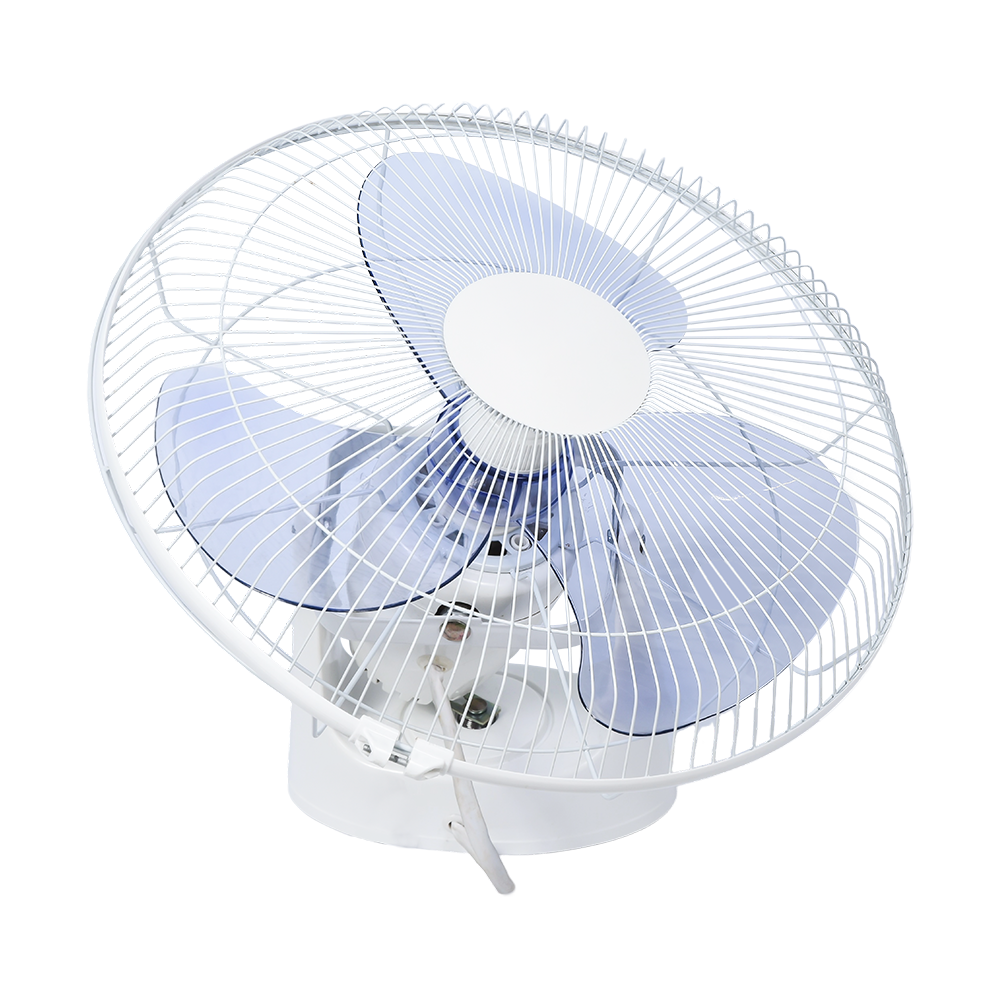 Ceiling-Mounted Circulation Fan with Three Speeds and Wide OscillationThis space-saving fan mounts directly to the ceiling, making it ideal for low-clearance rooms. With three wind speeds and multi-directional airflow, it supports year-round circulation, including winter use to lift warm air.View Product →
On the heat side, a 2200W graphene baseboard heater spreads warmth across a long panel, creating a low, steady convection current. Graphene elements respond faster than traditional wire elements and hold a stable surface temperature. Combine it with the ceiling fan's winter mode, and the warm air from the baseboard gets gently lifted and distributed across the room instead of pooling.
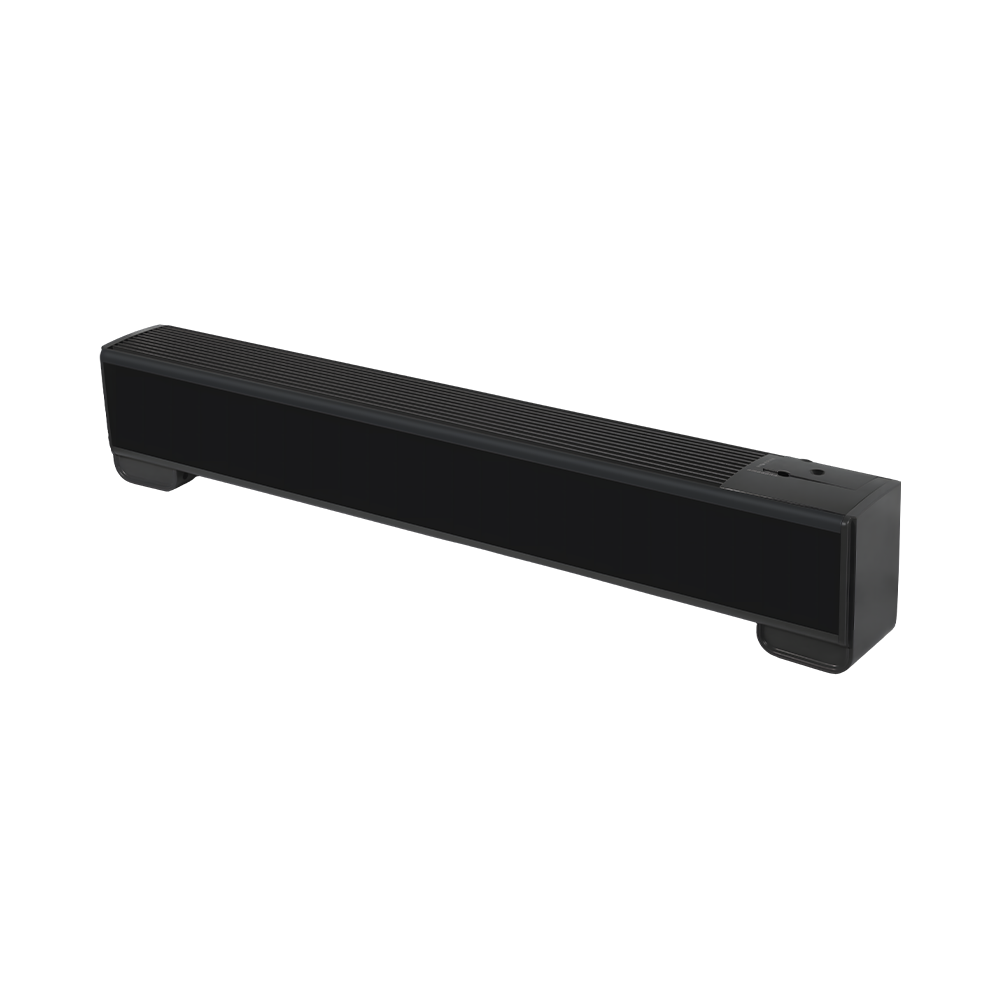 2200W Graphene Baseboard Heater with Thermostat and Flame DisplayFeaturing rapid graphene heating and a 18–35°C thermostat, this baseboard unit delivers steady convection warmth. Its winter mode pairs with a ceiling fan to distribute heat evenly, avoiding cold spots.View Product →
If a ceiling fan will handle the winter air-distribution job, evaluate these numbers before purchasing.
| Comparison point | AC motor | DC motor |
|---|---|---|
| Energy draw at low speed | Higher | Up to 70 percent lower |
| Speed steps | Usually 3 to 5 | Often 6 to 12 with smooth ramping |
| Reverse switching | Wall switch or pull chain | Remote or app in most models |
| Noise at low speed | Audible hum | Near-silent |
| Purchase price | Lower | Higher |
The low-speed energy comparison is a typical manufacturer measurement at equal airflow; actual savings vary with speed, blade size, and room layout. Before buying, check how the reverse function behaves at low speed and whether the remote can lock a fixed direction. A fan that reverses only at high RPM is not suitable for gentle winter air mixing. For blade pitch, mounting, and room-size guidance, read our modern flush-mount ceiling fan sizing and buying guide.
Buildings with ceilings above 4 metres have a heating problem that is invisible at eye level. Warm air collects in the upper third of the volume, often 3 to 5 degrees Celsius warmer than the occupied floor zone, while the heating system keeps firing to keep the floor comfortable.
Ceiling fans are the standard destratification tool. Running them slowly pulls warm ceiling air downward and mixes it with floor-level air, so the heating system cycles less often. Facilities that add air mixing to a radiant ceiling heating plan typically see the heating system run for shorter cycles through the coldest weeks.
Baopeng's ceiling-mounted fan is a practical fit for finishing workshops, retail mezzanines, farm buildings, and other spaces where a downrod is not an option. Pair it with a wall-mounted PTC fan heater, and a workshop can keep a workbench comfortable without heating the entire roof volume.
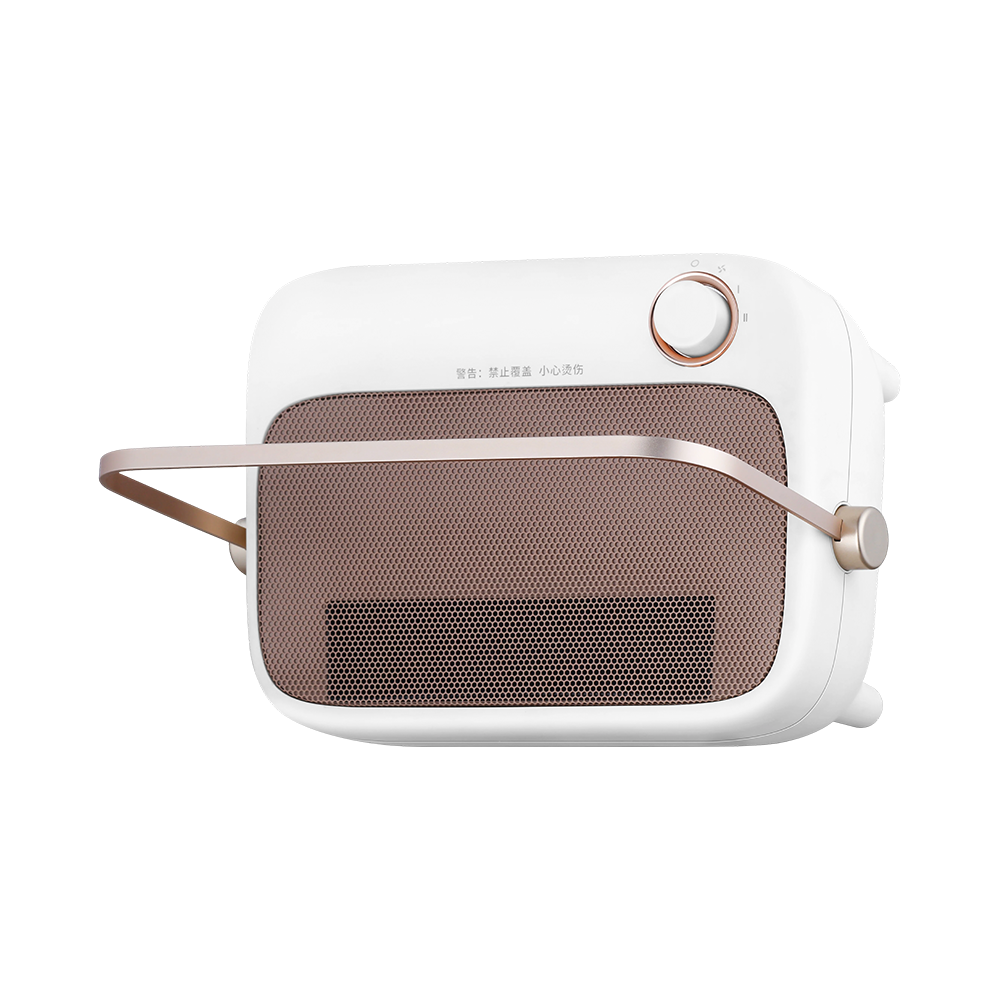 PTC Fan Heater with 2000W Power and Integrated Towel RackThis compact heater offers 2000W/1200W PTC heating with overheat protection and a towel rack, suited for bathrooms and living rooms. It complements ceiling fans in workshops by warming workbench areas efficiently.View Product →
If you are an importer, distributor, or brand team evaluating heated ceiling fans as an OEM product, the first engineering question is rarely the heating element. It is the air distribution plan.
Baopeng manufactures fans and heaters on separate, mature product lines, which makes a coordinated two-product program straightforward. A brand can pair a ceiling-mounted fan with a matching heater, share marketing assets, and keep the inventory structure simple. To explore this for your market, contact the Baopeng team with your target volume and price range.
Yes, integrated units exist, but they are rare and concentrated in commercial and industrial equipment. A ceiling fan with a built-in heating element starts with a disadvantage: heat rises, so the element sits in the warmest part of the room, and getting its heat down to the occupied zone is inefficient. For homes and offices, a ceiling fan for circulation plus a separate low-mounted heater is the more reliable approach.
No. A fan does not add heat; it moves air. What a ceiling fan can do in winter is recover warm air that has stratified near the ceiling and push it back into the living space. That reduces how long the heater needs to run and can make a room feel warmer at a lower thermostat setting.
Yes, provided the fan has a reverse function and you set it to clockwise at low speed. The U.S. Department of Energy recommends exactly this pattern for winter months. The gentle updraft pulls cool air up and pushes warm ceiling air down the walls. If the fan only reverses at high speed, you may feel a draft; low speed is essential.
For standard ceiling heights of 2.4 to 2.7 metres, a floor-level or baseboard heater is almost always the better choice. It places heat in the occupied layer, responds quickly, and works with the ceiling fan to spread warmth. Ceiling-mounted radiant heaters become attractive only in garages, workshops, or very high rooms where floor space is precious.
For year-round use, yes. A DC motor consumes noticeably less electricity at low speed, runs quieter, offers more speed steps, and usually includes remote-controlled reverse. That last point matters in practice, because people change fan direction more often when they do not need a ladder.
A combined unit is possible as a custom project, depending on target price, volume, and the installation profile. In most cases we recommend starting with a proven ceiling fan and a compatible heater as a two-SKU program, because that reduces tooling cost, speeds up production, and simplifies spare-parts support. The engineering team can evaluate a combined unit after the separate products are established. Contact us to discuss feasibility and order quantities.
The direct answer to the heated ceiling fan question is that a single combined unit belongs to a niche. For homes, offices, and most commercial spaces, the best result comes from splitting the job: a ceiling fan pushes warm air down, and a heater placed low produces the heat.
Baopeng's fan and heater lines pair naturally: ceiling-mounted fans cover the air-movement side, while heaters from 800W to 2200W cover the heat-output side. Define the ceiling height, the occupied zone, and the control preference first. The equipment choice becomes obvious after that.
Don't hesitate to contact when you need us!
For any questions and feedback from customers, we will reply patiently and meticulously.

The product has obtained multiple domestic and international certifications, including 3C, CE, ROHS, CB, and the ISO9001 quality management system.
CONTACT US
Address: No. 118, Guyao Highway, Zhangqi Town, Cixi City, Zhejiang Province, China
Wechat: +86-15921162693
Email: [email protected]
Mobile



 English
 Español
 عربى
عربى