
Aug 06, 2026
Content
If the distance between the ceiling and the fan blades would be less than seven feet using a standard downrod fan, a flush mount ceiling fan is the correct choice, not a style preference. A modern flush mount ceiling fan mounts the motor housing directly against the ceiling, removing the downrod entirely, which keeps the blades high enough to clear low rooms, sloped ceilings, and basements without eating into headroom.
The tradeoff is airflow. Because the blades sit closer to the ceiling, a flush mount unit typically moves air somewhat less efficiently than a downrod model of the same diameter, which is why matching blade span, motor power, and blade pitch to the room matters more with this style than with a standard fan.
A flush mount ceiling fan, sometimes labeled a hugger fan or low-profile fan by manufacturers, houses the motor in a canopy that sits within an inch or two of the ceiling surface. There is no downrod, or only a short stub of one, connecting the motor to the mounting bracket. This differs from a standard fan, which uses a three-to-six-inch downrod, longer in rooms with nine-foot-plus ceilings, to hang the motor and blades further into the room and improve air circulation.
A rule carried over from residential building guidance is that fan blades should clear the floor by at least seven feet, and a flush mount design is what makes that clearance achievable in a room where a standard fan would otherwise hang too low to meet it.
The two designs solve different problems, and choosing between them should follow ceiling height first, aesthetics second.
| Factor | Flush Mount | Standard Downrod |
|---|---|---|
| Mounting depth | 1 to 4 inches from ceiling | 10 to 18 inches or more from ceiling |
| Best ceiling height | 7 to 8 feet | 9 feet and above |
| Airflow efficiency | Slightly reduced due to ceiling proximity | Generally higher at the same blade span |
| Visual footprint | Compact, reads as part of the ceiling | More visible, can anchor a tall room |
| Sloped ceiling compatibility | Only on models with an angled mount rating | Adjustable with sloped ceiling adapter kits |
The category has moved well past the builder-grade white fan with a frosted glass light kit. Several shifts define what a modern flush mount ceiling fan looks like today.
DC motors are smaller and run cooler than the AC motors that dominated the category for decades, which lets manufacturers shrink the canopy depth. Many current models sit less than four inches from the ceiling, compared with six or more inches on older AC units, so the fan reads as part of the ceiling rather than a fixture hanging below it.
Rather than a bolt-on glass shade, most new flush mount fans build LED lighting directly into the motor housing or blade hub, with dimming and color temperature adjustment handled through a remote or wall control. This removes a failure point, since separate light kits were historically the first component to loosen or short out.
Composite and painted MDF blades have replaced the plastic and stamped-metal blades common a decade ago. Many blades are reversible, with a different finish on each side, such as walnut on one face and matte black on the other, so the fan can match a room's finishes without buying a second unit.
Wi-Fi and Bluetooth control is now common on mid-range and premium models, allowing scheduling, integration with voice assistants, and pairing with smart thermostats so the fan runs only when it will meaningfully offset heating or cooling load.
DC motors typically run at noise levels several decibels below comparable AC motors and draw meaningfully less wattage at the same airflow output, which is why most fans marketed as modern or premium today specify a DC motor rather than the older AC type.
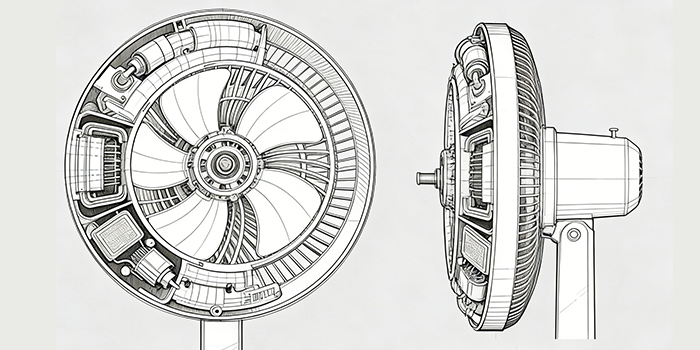
Because a flush mount fan sits closer to occupants than a downrod fan hanging higher in the room, motor noise and vibration are noticed more readily. This is the main reason DC motors have become the default in the modern segment of this category rather than a marketing add-on.
| Attribute | DC Motor | AC Motor |
|---|---|---|
| Typical noise level, high speed | Often under 40 decibels | Often 50 to 60 decibels |
| Speed settings | Often 6 or more, stepless on some models | Usually 3 |
| Motor housing size | Smaller, enabling slimmer flush mount depth | Larger, bulkier canopy |
| Typical price position | Mid-range and premium | Budget and mid-range |
Because a flush mount fan often replaces the room's only overhead fixture, its lighting has to do more work than lighting on a standard fan hung well above eye level.
One tradeoff worth knowing before buying: many integrated LED modules are not user-replaceable, so when the light eventually dims below a usable level, the entire light kit or canopy assembly typically needs to be serviced or swapped rather than simply changing a bulb.
Control options on modern flush mount ceiling fans span a wide range, and the right choice depends less on budget and more on how the room is used day to day.
The simplest and least expensive option, typically limited to three fixed speeds and no light dimming. Common on budget-tier fans for closets, garages, and rental units.
Replaces the existing light switch with a dedicated fan and light control, offering more speed steps and basic dimming without needing a remote to be within reach.
The most common control type on mid-range fans, typically offering full speed range, reverse direction, timer functions, and light dimming from a handheld unit.
Found on premium models, this tier adds scheduling, geofencing, integration with smart thermostats, and compatibility with major voice assistants, letting the fan run automatically based on time of day or room temperature rather than requiring a manual adjustment.
| Category | Typical Motor | Blade Material | Best Fit |
|---|---|---|---|
| Budget hugger | AC, 3-speed pull chain | Painted stamped steel or ABS | Closets, utility rooms, rentals |
| Mid-range modern | DC, remote control | Reversible MDF composite | Bedrooms, living rooms |
| Premium smart | DC, app and voice control | Solid wood veneer or matte composite | Open-concept living areas, primary suites |
| Damp-rated outdoor | DC or AC, sealed housing | ABS or weather-treated composite | Covered patios, porches, sunrooms |
Finish choice affects more than appearance. Matte black and brushed nickel hide dust and fingerprints better than polished chrome, which matters on a fan mounted low enough to be within easy reach for cleaning and, in households with children, within easy reach for touching.
Sizing a fan by blade diameter to the square footage of the room is the single most common step people skip, and it is the reason many flush mount fans feel underpowered even though nothing is wrong with the unit itself.
| Room Size | Recommended Blade Span | Typical Room Type |
|---|---|---|
| Under 75 sq ft | 29 to 36 inches | Bathroom, walk-in closet, nursery |
| 75 to 175 sq ft | 36 to 42 inches | Bedroom, home office |
| 175 to 350 sq ft | 44 to 50 inches | Primary bedroom, den |
| 350 to 450 sq ft | 50 to 54 inches | Living room, open-concept great room |
| Over 450 sq ft | 56 inches or larger, or two fans | Great rooms, finished basements |
Beyond diameter, airflow output matters. Fans are commonly rated in cubic feet per minute, or CFM, at high speed. A well-built 52-inch flush mount fan should move somewhere in the range of 4,000 to 6,000 CFM on high, and checking that figure on the product spec sheet is a more reliable indicator of performance than blade count or motor wattage alone.
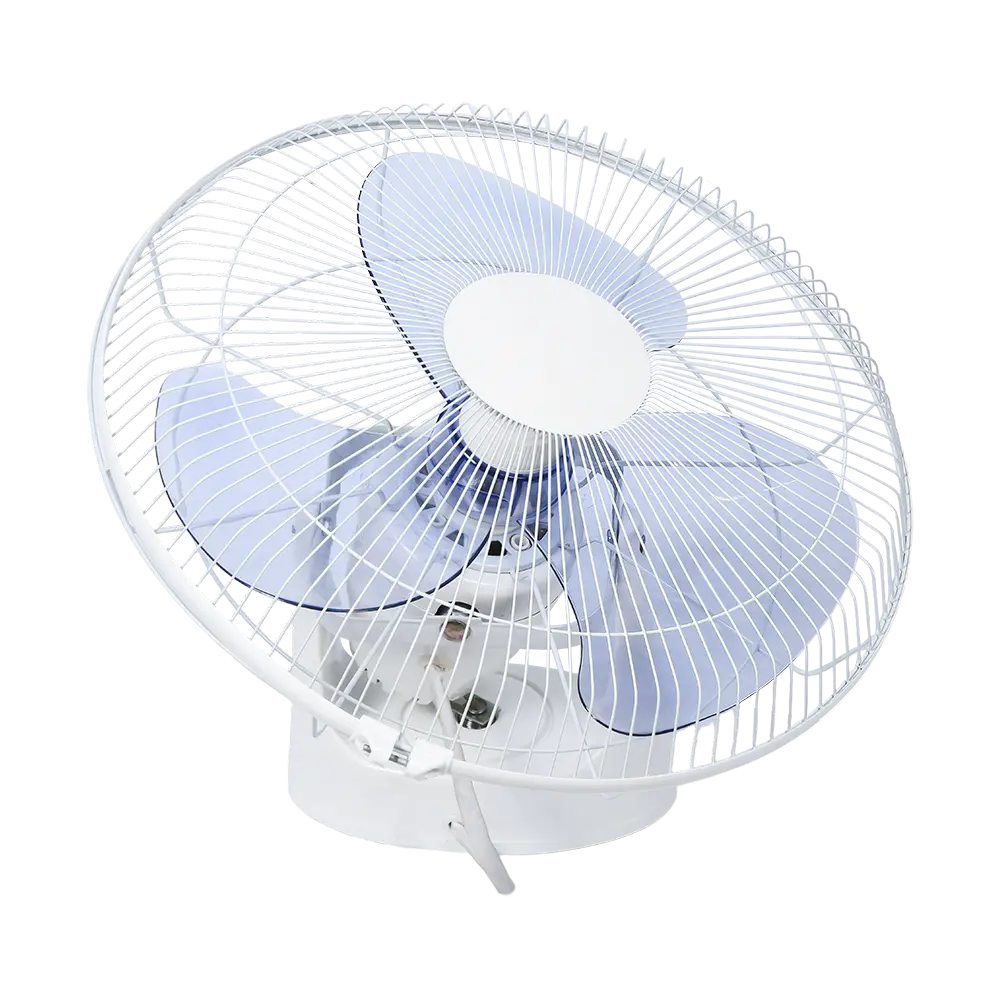
Blade count is the most heavily marketed spec and the least useful one on its own. Blade pitch, the angle at which the blades are set relative to flat, has a far greater effect on airflow.
Flush mount fans are not simply screwed into any existing light fixture box. A few details determine whether the installation is safe and whether the fan runs without wobble or noise.
A flush mount fan intended for a covered porch, sunroom, or patio needs a rating that matches its exposure, not just a weather-resistant appearance.
| Rating | Where It Belongs |
|---|---|
| Dry rated | Fully indoor rooms only, no exposure to humidity or moisture |
| Damp rated | Covered porches, sunrooms, and bathrooms not directly exposed to rain or sprinklers |
| Wet rated | Uncovered patios and gazebos, or any location directly exposed to rain |
Noise matters more on a flush mount fan installed in a bedroom than almost any other spec, since the motor sits directly above the bed at low ceiling height.
| Speed | DC Motor | AC Motor |
|---|---|---|
| Low | Under 30 decibels | 35 to 40 decibels |
| Medium | 30 to 38 decibels | 42 to 50 decibels |
| High | Under 40 decibels | 50 to 60 decibels |
Because the motor sits close to the ceiling with limited airflow around the housing, flush mount fans benefit from slightly more attentive maintenance than standard downrod fans.
Dust the blades and motor housing every four to six weeks with a microfiber cloth or a soft brush attachment; accumulated dust on the top of the blades is the leading cause of imbalance over time. Check that mounting screws remain tight every few months, since the shorter distance between motor and ceiling means even a small amount of play can produce a rattle.
Clean or service integrated LED light components according to the manufacturer's schedule rather than waiting for failure, since many flush mount fans use non-removable light modules that require the entire canopy to be accessed for service. Reverse the blade direction seasonally, clockwise in winter on low speed to push warm air down, counterclockwise in summer to create a cooling downdraft, which reduces strain on the motor by matching output to the season's needs.
A ceiling fan does not lower a room's temperature; it lowers the perceived temperature by moving air across skin, which is why running a fan in an empty room wastes electricity without benefit.
Prioritize low noise ratings and a warm-dimmable light setting, since this is the room where motor sound and harsh lighting are noticed most directly.
A larger blade span and higher CFM output matter more here, since these rooms are typically larger and often have sightlines from the kitchen or dining area that make the fan a visible design element.
A mid-size fan with fine-grained speed control helps maintain a comfortable temperature during long working hours without the abrupt jumps common on three-speed pull chain models.
A damp or wet-rated fan with a sealed motor housing is non-negotiable, and finishes like powder-coated bronze or matte black resist corrosion better than polished metal in humid climates.
There is no functional difference. Hugger, low-profile, and flush mount are different names manufacturers use for the same design, where the motor mounts close to the ceiling without a downrod.
Generally yes, by a modest margin. Because the blades sit closer to the ceiling, airflow is somewhat more restricted than it would be with a downrod fan hanging further into the room, which is why choosing a slightly larger blade span or a higher CFM rating helps offset the difference.
Some models can, but not all. The product specifications should state a maximum slope angle the mounting canopy supports; installing a fan rated only for flat ceilings on a steep slope can prevent the blades from clearing the ceiling evenly.
A room that size is roughly 168 square feet, which falls into the 44 to 50 inch blade span range under standard sizing guidance.
Many current mid-range and premium models include Wi-Fi or Bluetooth modules that connect to a manufacturer app, and a growing number support integration with major voice assistants and smart thermostats for scheduling and energy-saving automation.
Seven feet of clearance between the blades and the floor is the widely used minimum, and this figure is what determines whether a room needs a flush mount fan instead of a standard downrod model.
Most modern flush mount fans include integrated lighting, which typically replaces an existing ceiling light fixture rather than working alongside one, so the fan effectively becomes the room's primary light source.
No. Blade pitch and motor power influence airflow more than blade count. A three or four-blade fan with a steep pitch can outperform a five or six-blade fan with a shallow one.
If a fan-rated electrical box is already in place, many homeowners with basic electrical comfort can complete the installation. If the existing box is not fan-rated or the room has no existing fixture, hiring a licensed electrician to install proper support is the safer route.
Slight wobble after installation is common even on well-built fans, usually from minor weight differences between blades introduced during shipping. Using the included balancing kit to add small adhesive weights to the lighter blades typically resolves it within a few adjustments.
Don't hesitate to contact when you need us!
For any questions and feedback from customers, we will reply patiently and meticulously.

The product has obtained multiple domestic and international certifications, including 3C, CE, ROHS, CB, and the ISO9001 quality management system.
CONTACT US
Address: No. 118, Guyao Highway, Zhangqi Town, Cixi City, Zhejiang Province, China
Wechat: +86-15921162693
Email: [email protected]
Mobile



 English
 Español
 عربى
عربى