
Sep 07, 2026
Content
The short version: a heater fan is the fastest practical way to warm a small or mid-sized room. It pulls cool air across a heating element and pushes it back out as moving warm air, taking the chill off a 160 sq ft (15 sq m) bedroom in roughly 10 to 20 minutes. If you are buying one, the decision compresses into three checks: choose a PTC ceramic element for stable, self-regulating output, size about 10 watts of heating power to every square foot of floor area, and prioritize thermostat precision, low noise, and a tip-over cut-off over cosmetic extras.
The reasoning behind those checks is what the rest of this guide covers: how heater fans generate and distribute heat, where they beat radiant and oil-filled designs (and where they do not), how wattage maps to room size, what a unit really costs to run at current electricity prices, and how to separate genuinely useful features from filler. These are the same trade-offs weighed when heaters are engineered for global brand partners, Baopeng has manufactured seasonal appliances for names such as Haier and Westinghouse since 2002, so they hold up whether you are buying for one household or an entire product line.
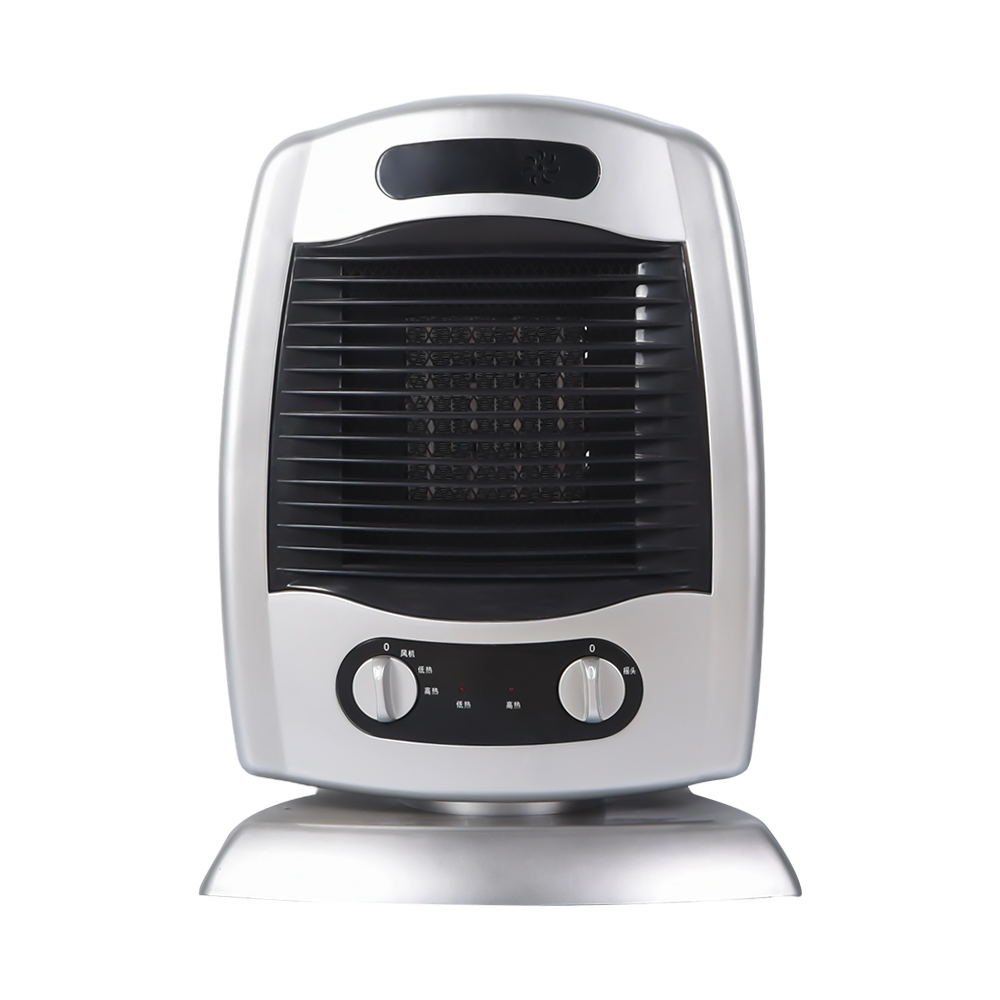
Every heater fan, from a desk-sized mini unit to a 2,200 W tower, is built from three functional blocks: a heating element, a blower, and a control layer made up of a thermostat, switches, and sensors. Room air is drawn through a rear intake, heated as it passes the element, and pushed out through a front grille typically 20 to 40 degrees Celsius warmer than the room. Because the heat arrives as moving air rather than slow radiation, it mixes through the space instead of pooling near the unit.
The element type defines the personality of the heater:
The fan is the part that earns the product its name and its main advantage. In a still, heated room, warm air stratifies: the layer near the ceiling can sit several degrees warmer than the floor. Forced convection breaks up that gradient, so the thermostat reads the room accurately and occupants feel even warmth instead of a hot head and cold feet.
No single heater type wins every scenario, and understanding the trade-offs prevents the most common buying mistake: using a spot radiator where whole-room airflow is actually needed.
| Heater Type | How It Delivers Heat | Best Suited To | Trade-offs |
|---|---|---|---|
| PTC ceramic fan heater | Forced warm air from a self-regulating ceramic element | Everyday rooms, offices, quick warm-ups | Fan noise; brief dust smell on first seasonal use |
| Quartz or carbon radiant | Infrared that warms people and objects directly | Spot heating where you sit or stand still | Heats a zone, not the air; benefit ends when you move |
| Heating-wire fan heater | Fan-driven warm air from a resistive coil | Budget rooms and short bursts of heat | Hotter surfaces; coarser control on basic models |
| Graphene baseboard | Low-temperature convection along a long, wide panel | All-day background warmth along a wall | Slower initial warm-up; needs floor space |
| Oil-filled radiator | Sealed thermal oil releasing heat by natural convection | Quiet overnight bedroom heating | Slow to respond; heaviest to move between rooms |
A practical rule follows from the table: if you need the air itself warmer across a whole room, choose a heater fan or a convection baseboard; if you only need a person warmer while the air stays cool, choose radiant.
The industry rule of thumb is about 10 watts of heating power per square foot, or roughly 100 watts per square meter, assuming ceilings of 2.4 to 2.7 meters and average insulation. Add 20 to 30 percent capacity for poorly insulated rooms, older windows, or ceilings above 3 meters, and scale down slightly for small, well-sealed rooms where a big unit will just cycle on and off.
There is also a hard ceiling worth knowing: most portable heaters sold in North America top out at 1,500 W because they are designed around standard 120-volt household circuits. In 220 to 240-volt markets across Europe, Asia, and the Middle East, 2,000 to 2,200 W units are the standard top end. This is why a single unit comfortably covers up to roughly 150 sq ft in the US but up to around 215 sq ft in 240-volt regions.
| Room Size | Recommended Wattage | Typical Use |
|---|---|---|
| Up to 86 sq ft (8 sq m) | 800 to 1,000 W | Desk area, walk-in closet, small bathroom-adjacent zone |
| 86 to 160 sq ft (8 to 15 sq m) | 1,200 to 1,500 W | Bedroom or home office on the high setting |
| 160 to 215 sq ft (15 to 20 sq m) | 1,800 to 2,000 W | Living room with the door closed |
| 215 to 320 sq ft (20 to 30 sq m) | 2,000 to 2,200 W, or two smaller units | Open-plan spaces; two zoned units beat one large one |
A bigger heater cannot fix a drafty room. Sealing window gaps, closing doors, and blocking under-door drafts returns more comfort per dollar than moving up a wattage class, because every degree of heat that escapes is capacity you paid for twice.
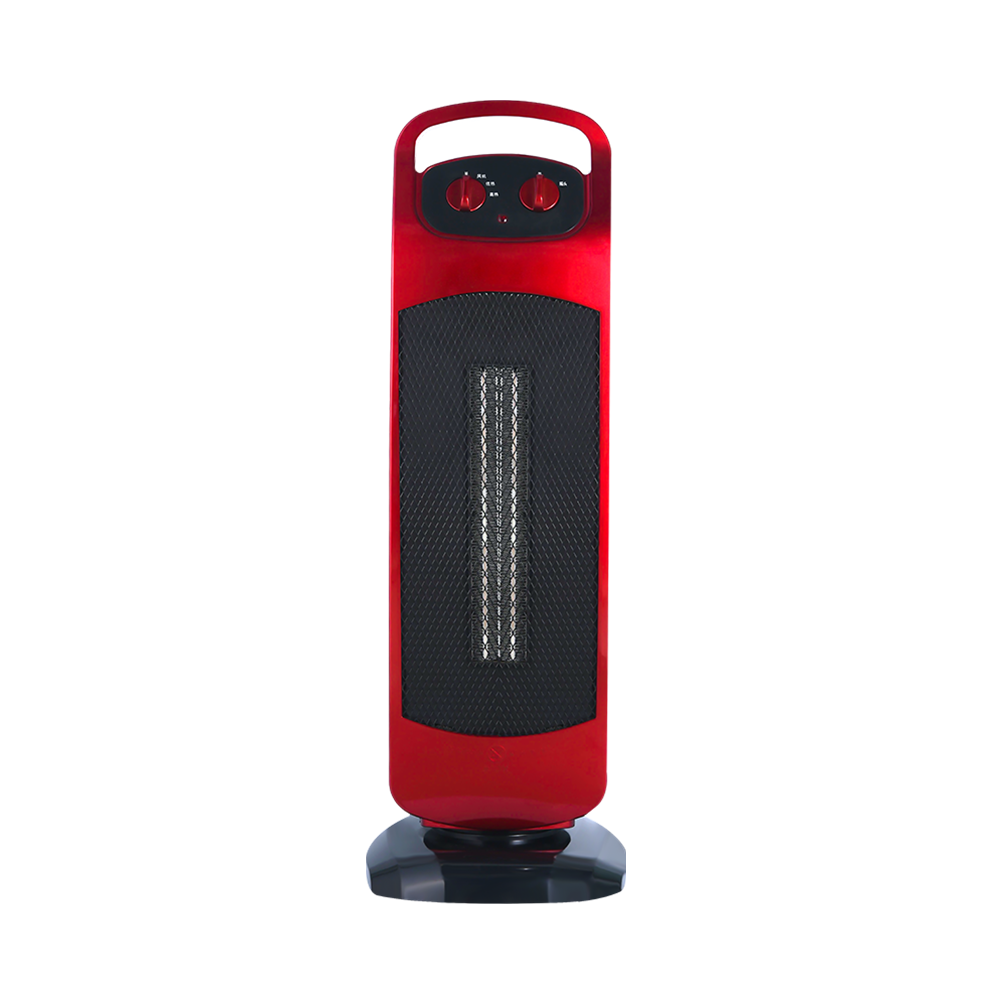
For rooms in the 15 to 25 sq m range, a 2,000 W PTC ceramic tower is the workhorse configuration: enough output to recover a cold room quickly, paired with an electronic thermostat that trims consumption once the setpoint is reached. The 2000W PTC ceramic heater in Baopeng's range is a representative example of this class, combining a tall tower body with remote control and multi-stage heating:
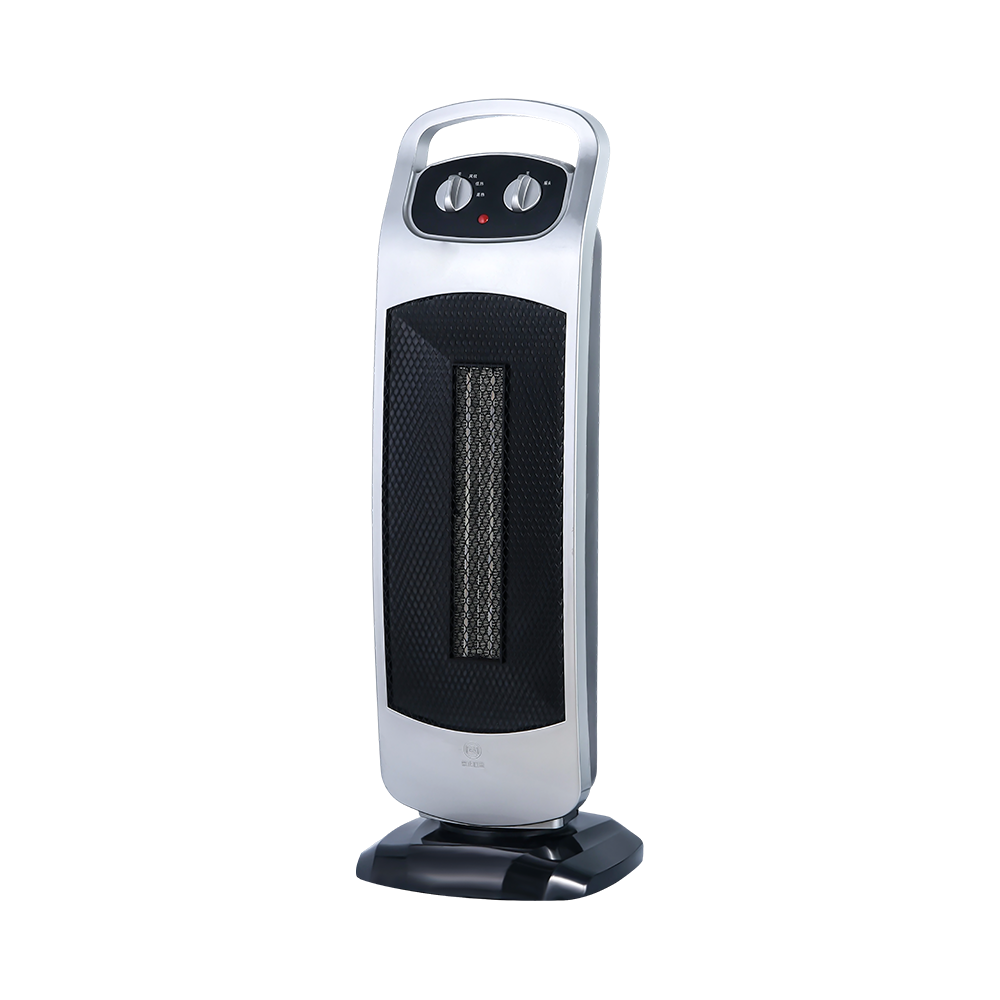 2000W PTC Ceramic Tower Heater with Remote ControlA 2,000 W PTC ceramic tower with oscillation and dual power settings, suited to 15-25 sq m rooms. Its automatic tilt power-off adds safety during longer heating sessions.View Product →
An electronic thermostat holds a setpoint within about 1 to 2 degrees Celsius and lets the unit cycle off instead of running flat out, which is where most of the real-world energy savings come from. Mechanical dials cost less but hold temperature coarsely. If you plan to run the heater for hours at a time, the thermostat is the one spec worth paying extra for.
Most fan heaters on the market operate somewhere between 40 and 55 dB depending on speed. As a practical benchmark, aim for roughly 45 dB or lower on the low setting for bedrooms, comparable to a quiet library, while 50 to 55 dB on high is acceptable in living areas. Two-stage heating helps here: run the high setting to warm the room quickly, then drop to low or eco mode to hold the temperature quietly.
Wide oscillation spreads warm air across the room instead of baking one corner. A fixed front-facing outlet creates a hot-and-cold split where the area in front of the unit overheats while the far side of the room stays cold, which also fools the thermostat into running longer than necessary.
A tip-over switch that cuts power when the body tilts, plus an internal overheat sensor, are standard equipment on well-built units and worth confirming on any model you consider. Check that the base is broad and the center of gravity low, particularly in homes with children or pets who can bump a tower unit.
Run the heater fan on high for 15 to 30 minutes before bed, then let the timer or thermostat take over. For all-night operation, a low fan speed with an eco setting keeps noise acceptable; if your bedroom is very small, a quieter convection baseboard may be the better companion to the fan heater you use for the evening warm-up.
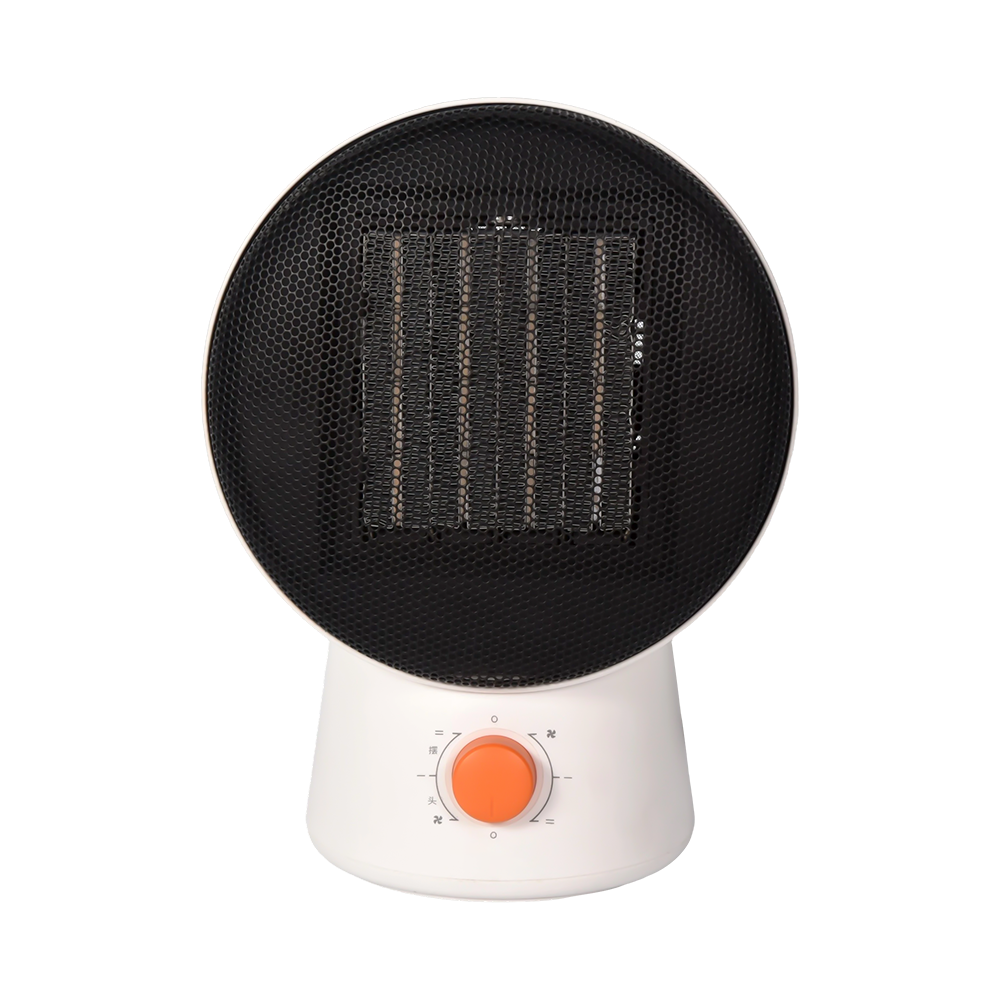
Heating yourself instead of the whole room is the cheapest comfort strategy there is. An 800 to 1,000 W mini unit near the desk keeps the immediate zone warm while the central system stays low, and the running cost section below shows just how small that bill is.
Wall mounting solves two chronic heater problems at once: lost floor area and curious pets or toddlers. A high-mounted PTC mechanical fan heater directs warm air downward and across the room, keeping the heat source out of reach while the floor stays clear:
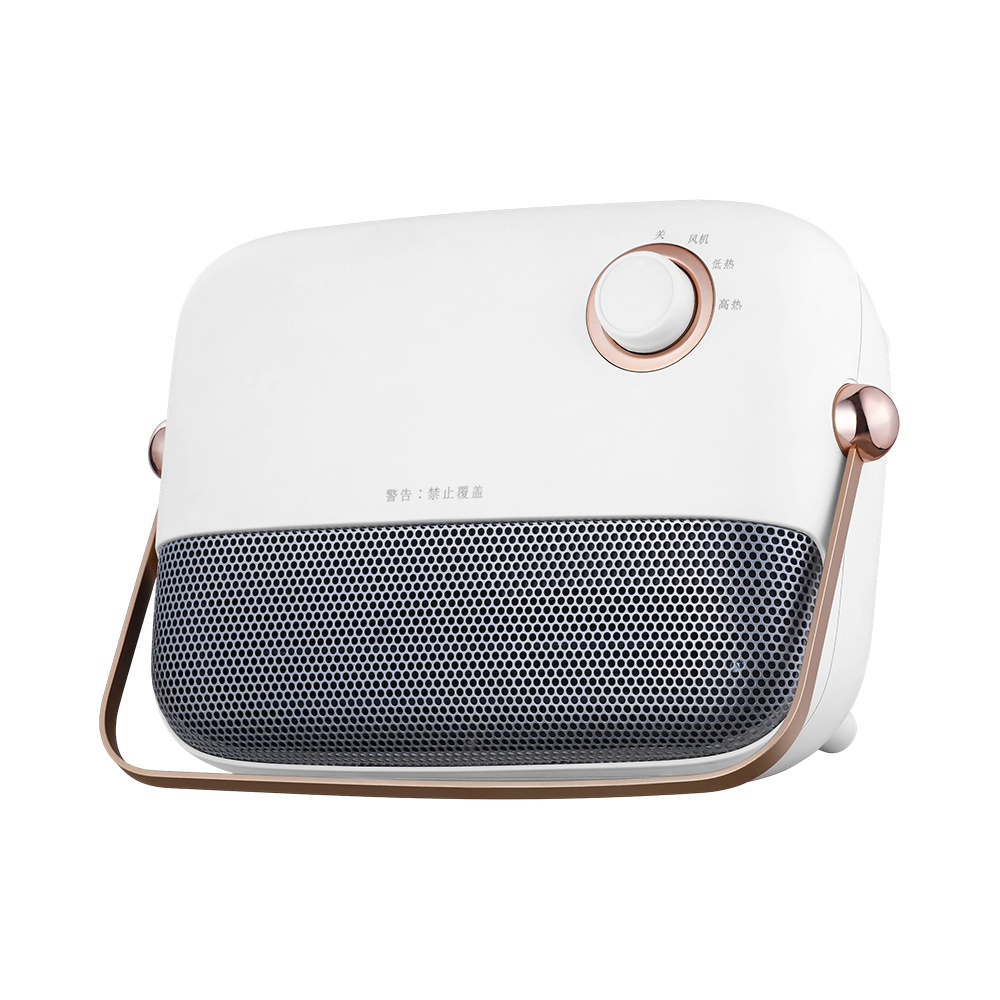 Wall-Mounted PTC Mechanical Fan Heater with Towel RackThis wall-mountable 2000W/1200W PTC fan heater keeps floors clear and heat out of reach, with mechanical knob controls and a towel rack for bathroom use.View Product →
Uninsulated outbuildings and basements rarely justify full central heating, but a portable fan heater aimed at the workbench turns a three-month shutdown season into a usable workspace. Spot-heat where you actually stand rather than trying to warm the whole volume.
For desk-side and countertop duty, compact graphene fan heaters have become a popular middle ground: the graphene-coated surface spreads heat more evenly than bare wire, the footprint stays small, and a mechanical dial is all the control a personal heater really needs:
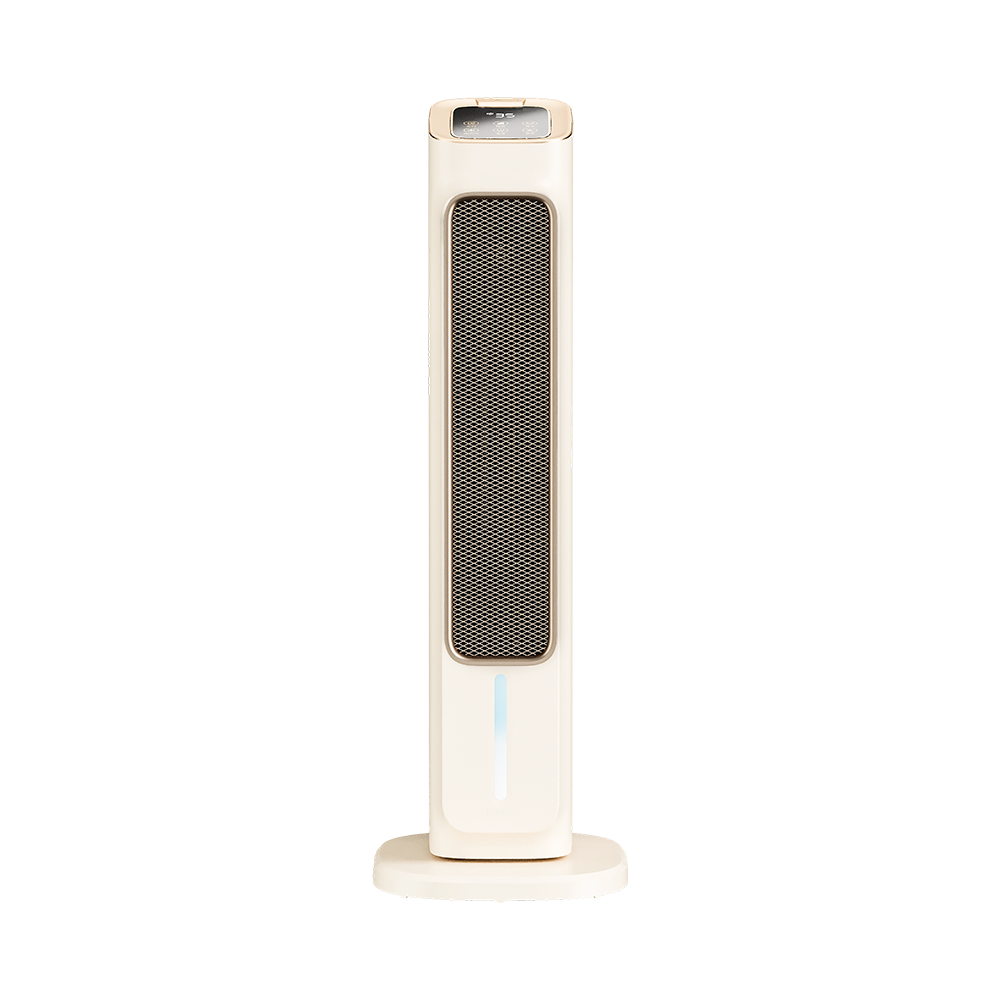 Graphene Mechanical Fan Heater with Dual FansA compact 2000W desktop heater using graphene heating for even warmth, dual fans for wider air delivery, and a washable filter, ideal for deskside personal heating.View Product →
The formula is simple: cost equals watts divided by 1,000, multiplied by hours of use, multiplied by your electricity price per kilowatt-hour. For reference, the U.S. Energy Information Administration puts the average American residential electricity price at roughly 17 cents per kWh. Working through a typical case:
A 1,500 W heater fan running for one hour uses 1.5 kWh. At 17 cents per kWh, that is about 26 cents per hour. Eight hours a day at full output comes to roughly $2.05 per day, or about $61 across a 30-day month. In practice, a thermostat cycles the element off for a share of that time, so a realistic bill lands closer to $1.20 to $1.50 per day, or roughly $36 to $45 per month for a bedroom used every night.
The desk scenario is far kinder: an 800 W personal heater used three hours a day costs around 40 cents, under $10 a month for weekday use. That arithmetic explains why zone heating works: the U.S. Department of Energy estimates that space heating accounts for about 29 percent of energy costs in a typical American home, so warming only the occupied room with a heater fan while keeping the central system low is where the savings actually come from.
Where electricity is expensive, fuel-based heating changes the math, and it helps to compare like with like. Our diesel heater guide on efficiency, running cost, and sizing for fuel-based heating breaks down that comparison in detail.
A heater fan has almost no maintenance schedule, but a handful of habits keep output strong and extend the life of the element and motor:
A heater fan wins on speed and evenness of warmth: a PTC ceramic element brings the room up fast and then regulates itself, while the fan spreads that heat so no corner is left cold. Size roughly 10 watts per square foot, spend on the thermostat and low noise rather than extras, and use zone heating to keep the running costs in check. That combination is why fan heaters remain the default choice for bedrooms, offices, and workspaces alike.
To see how these configurations map to real products, browse Baopeng's complete heater line, from PTC ceramic towers and wall-mounted fan heaters to graphene baseboards and quartz radiators.
At the wall socket, every 1,500 W electric heater costs exactly the same per hour, because a kilowatt-hour is a kilowatt-hour no matter which unit consumes it. Heater fans only feel expensive when they run flat out without a thermostat. A precise electronic thermostat and an eco mode typically cut real consumption by 30 to 50 percent, and radiant types save money only in the narrow case where you want to heat a person rather than a room.
The whole room, provided the wattage matches the floor area. Forced convection continuously mixes the air, which is precisely the advantage over radiant heaters that warm only the zone inside their beam. If one corner of a correctly sized room stays cold, the usual culprit is placement: move the unit away from curtains or furniture blocking the intake and outlet, and enable oscillation.
A thin film of household dust settles on the heating element during storage and burns off within the first minutes of use. It is harmless and disappears after 10 to 15 minutes. You can prevent most of it by cleaning the intake grille before the season starts, and an odor that persists well beyond the first hour is a sign the unit needs cleaning rather than a fault in the design.
It is better to use the timer: warm the bedroom before sleep, then let the unit shut off, and rely on bedding to hold the comfort through the night. If you do run it overnight, use the low setting with the thermostat set a few degrees lower, keep it at least a meter from bedding and curtains, and confirm the model has a tip-over switch and overheat sensor before you buy.
For daily family use, PTC ceramic is the safer engineering choice because its resistance rises with temperature, so the element self-limits instead of getting hotter the longer it runs. Heating-wire units cost less and reach full output just as fast, but their surfaces run hotter and they depend entirely on external sensors for control. Choose wire-based models for tight budgets and occasional use; choose PTC for anything that runs daily.
A single 2,000 to 2,200 W unit manages roughly 20 to 25 sq m of open space, and beyond that the honest answer is zoning: two smaller units, one near the seating area and one near the workspace, deliver more even warmth than one large heater fighting the whole volume. Pairing a fan heater for quick evening warm-ups with a baseboard unit for steady background convection is the combination that works best in open layouts.
Don't hesitate to contact when you need us!
For any questions and feedback from customers, we will reply patiently and meticulously.

The product has obtained multiple domestic and international certifications, including 3C, CE, ROHS, CB, and the ISO9001 quality management system.
CONTACT US
Address: No. 118, Guyao Highway, Zhangqi Town, Cixi City, Zhejiang Province, China
Wechat: +86-15921162693
Email: [email protected]
Mobile



 English
 Español
 عربى
عربى